


A snowmobiler died in an avalanche near the Montana-Idaho border over the weekend. It is Idaho’s first avalanche fatality of the 2025-2026 season.
The slide occurred on Feb. 22 north of the Keg Springs trailhead in the Centennial Mountains near Island Park, Idaho, according to the Gallatin National Forest Avalanche Center.
In a Sunday evening Instagram post, the avalanche center wrote that it would be investigating the circumstances surrounding the avalanche — standard procedure for fatal avalanches — on Monday.
“Our thoughts are with the family and friends of the victim during this tragic time,” the avalanche center’s post read.
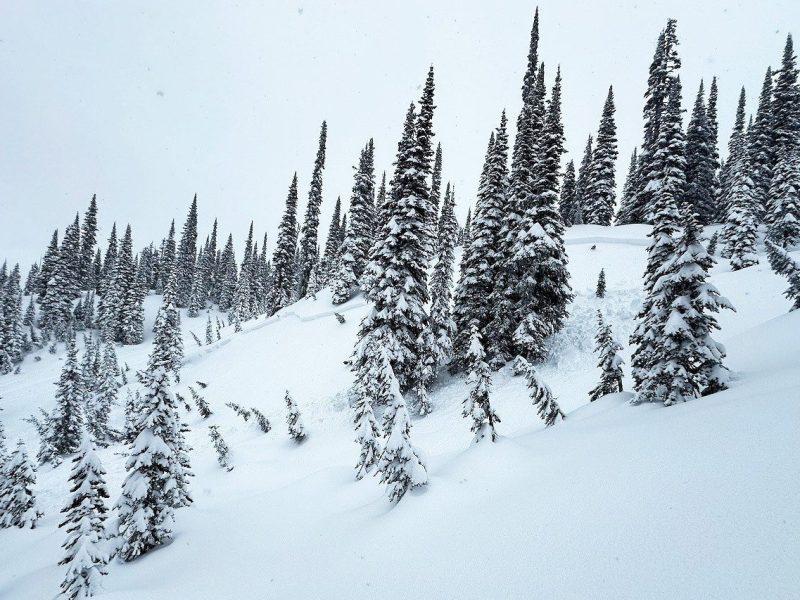
According to preliminary information, the avalanche was unintentionally triggered by a snowmobiler at approximately 2 p.m. Sunday. The slide occurred on an eastern aspect along a persistent weak layer in the snowpack, according to the avalanche center, which lists the Island Park area as having “considerable” avalanche danger.
Two other individuals in the group may have been caught in the slide as well, but were uninjured, the avalanche center wrote in its preliminary report.
RELATED
Avalanche forecasters warn of ‘considerable’ slide risks after late-winter storm
After minimal snowfall across Montana most of the winter, the arrival of a heavy storm this week has led avalanche forecasters to warn recreators about “considerable” slide risks across several mountain ranges.
As of Feb. 23, there have been 18 avalanche fatalities throughout the West, according to Avalanche.org, which serves as a clearinghouse for educational resources and information on avalanche incidents. Eleven of this winter’s fatalities occurred in California, which has seen three deadly slides this winter.
Twelve backcountry skiers and three guides were caught in an avalanche near Perry Peak, California, on Feb. 17. Nine of the group died in that slide, which has been described as the deadliest avalanche in modern California history.
Avalanche risk is currently listed as “considerable” in the mountains of south-central and southwest Montana. In northwest Montana, which saw significant snowfall in the past week, conditions were upgraded to “high,” one level from “extreme,” which is the highest-ranking level of avalanche danger, according to the Flathead Avalanche Center.
Avalanche forecasters in that area issued an avalanche warning Monday morning urging backcountry skiers and snowmobilers to steer clear of avalanche terrain due to the potential for “very large” natural or remotely triggered avalanches. A winter weather advisory remains in effect for the West Glacier area through Tuesday morning with up to 7 inches of snow expected along mountain passes and wind gusting to up 35 miles per hour. Forecasters note that these slides could break hundreds of feet across a slope and run their full slide-path potential from upper elevations down to valley floors.
“The past week has seen at least seven reported near-misses or accidents,” the center wrote in its warning. “Keep what might seem like a ridiculous distance from avalanche terrain today.”
LATEST STORIES
Poll week: How Montanans feel about sales tax, immigration and state officials
We polled Montana voters on an array of issues. Results will roll out the week of March 2.
Where does eastern Montana start? Montanans disagree
Montana is in many ways a land of two halves: a western Montana of snow-capped mountains and national forests joined in political unity with an eastern Montana of wide-open plains and flatland agriculture. It’s a time-honored divide: peaks versus plains, Missoula versus Miles City, Flathead versus Fort Peck lakes. But where exactly is the dividing line?
Montana voters overwhelmingly view cost as a major mental health care hurdle
According to a Montana Free Press-Eagleton Poll, conducted in late 2025 and early 2026, 67% of respondents cited “cost of services” as a major problem when it comes to accessing care. A smaller share, 42%, cited the stigma associated with receiving care as a major problem, while 47% said the same about the travel distance necessary to access services.