

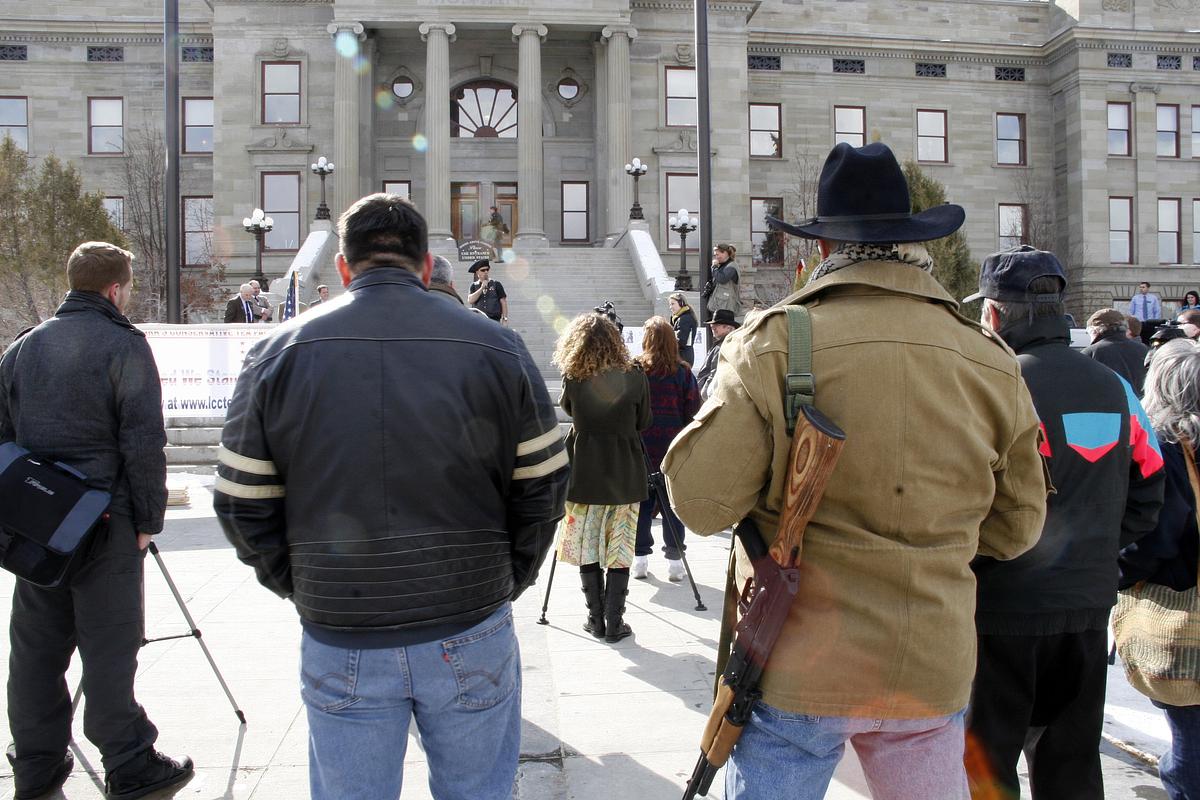
Amid the swirl of accusations after federal agents shot and killed Alex Pretti last weekend in Minnesota, some federal officials focused on the fact that Pretti carried a firearm to a public demonstration, something that often happens in Montana and is legal here.
FBI Director Kash Patel said on Fox News that “you cannot bring a firearm, loaded, with multiple magazines to any sort of protest that you want.” The comment seemed to suggest additional limits on when and how someone can carry a firearm.
Similar comments prompted the National Rifle Association to push back against officials who criticized Pretti’s decision to carry a gun.
Minnesota requires a permit to carry a firearm in public. Pretti had that permit, according to local officials.
In Montana, it’s legal to bring a firearm to a protest — concealed or not. Montana is one of 29 states with so-called “constitutional carry” laws, meaning gun owners are allowed to have concealed firearms without a permit, with few exceptions.
That became law in 2021 after the Montana Legislature passed a constitutional carry bill.
“Our Second Amendment is very clear: The right of the people to keep and bear arms shall not be infringed,” Gov. Greg Gianforte said at the 2021 bill signing. “Every law-abiding Montanan should be able to defend themselves and their loved ones.”
Article II of the Montana Constitution also outlines the “right to bear arms” for citizens.
Montanans can’t tote their guns anywhere, however. Exceptions in state law say that residents can’t bring guns into correctional or state-run treatment facilities. Guns can’t be brought through airport security checkpoints or onto military bases. County and federal courthouses and other buildings “owned and occupied by the United States” are also off limits.
Federal laws prohibit guns on school grounds. One of those laws, the Gun-Free School Zones Act, generally prohibits guns from areas within 1,000 feet of schools. But last fall, the U.S. Court of Appeals for the Ninth Circuit dismissed the indictment of a Billings man who was repeatedly seen in front of his home holding a shotgun. He lived across the street from an elementary school and was within the 1,000-foot zone.
The court’s decision was made in part because of Montana’s “unique” gun licensing law, which imposes fewer hurdles than those in other states.
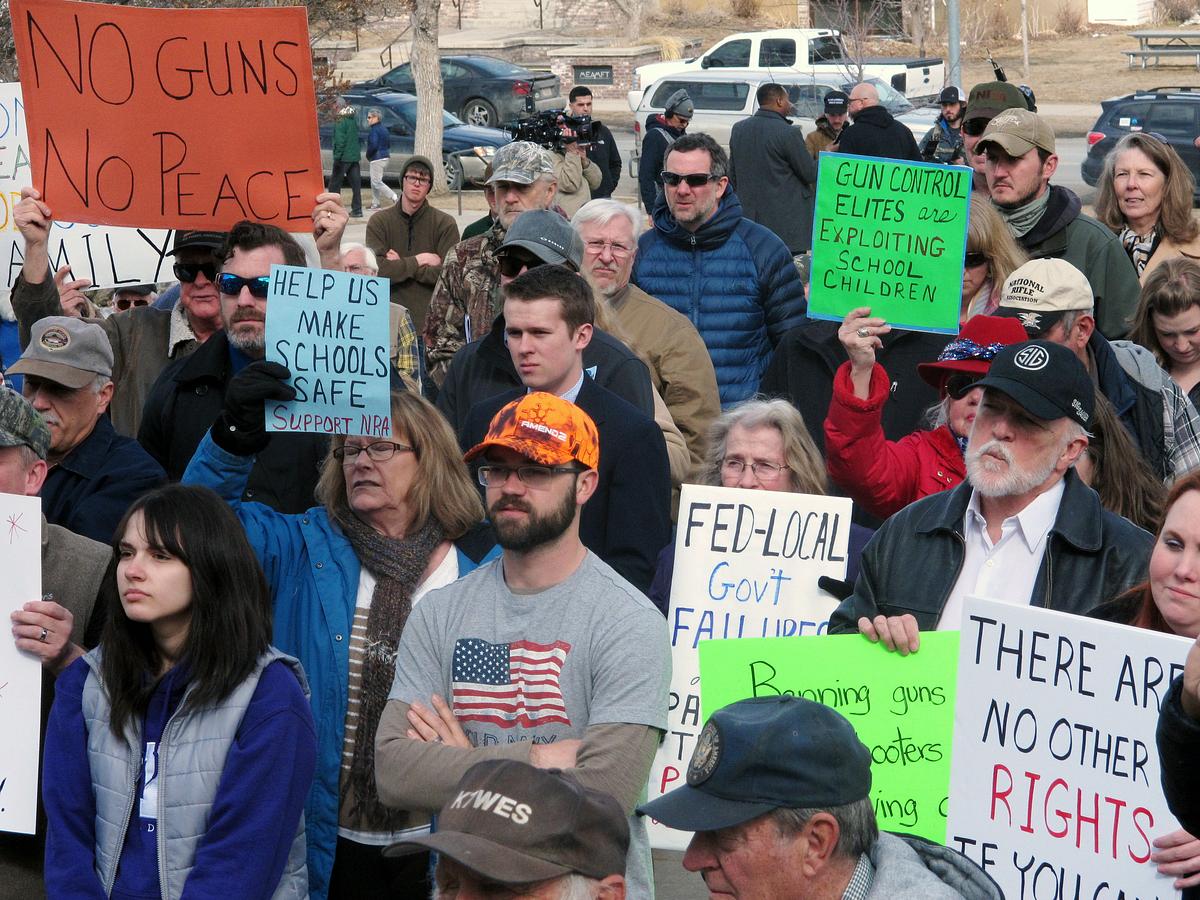
Montana’s public colleges and universities generally don’t allow people to carry firearms on campus except with some narrow exceptions for law enforcement. The ability to regulate gun possession on campus rests with the Board of Regents, which challenged the applicability of constitutional carry and won a favorable Montana Supreme Court decision in 2022.
Local jurisdictions, like cities and counties, are prohibited by state law from passing stricter gun regulations except for where guns can be fired.
Private property owners, including businesses, can prohibit people from carrying guns.
For that and other reasons, Montana Shooting Sports Association President Gary Marbut told Montana Free Press that the state is No. 1 in protecting the rights of gun owners. He said his organization has shepherded 73 bills through the state Legislature to secure those rights.
“Because of that success, Montana is generally held nationally by experts who know about it as having the best gun laws in the United States,” he said.
Although Montanans can conceal carry without a permit, they can still obtain such a permit. The top reason for that is to undergo a background check at the time of permit application to avoid going through that when buying a gun, according to Cascade County Sheriff Jesse Slaughter.
“That [background check] goes on their concealed weapons permit,” Slaughter said. “So when you go into a store to buy a gun, you’re not delayed.”
In addition, permit holders can carry guns into state government buildings, according to the Montana Department of Justice. A website for the Montana Legislature says that weapons, including firearms, aren’t allowed in the Capitol building.
Montana permits are also recognized in some other states, and for others, it’s a part of the culture of gun ownership.
“Some people just want to be seen as a sheriff-certified good guy for a variety of reasons, including for any interaction with law enforcement,” Marbut said.
Marbut declined to comment specifically on Pretti’s killing. He called Patel’s comments part of an “East Coast mentality” that ignores the prevalence of gun ownership in other places like Montana.
Slaughter also declined to comment on Pretti, saying that a fuller investigation is necessary before making a judgment.
LATEST STORIES
Western Montana U.S. Rep. Ryan Zinke said he won’t seek reelection citing health problems
“I have made the decision to leave office at the end of my fourth term and not seek re-election,” Zinke said Monday in a letter to constituents.
Poll week: How Montanans feel about sales tax, immigration and state officials
We polled Montana voters on an array of issues. Results will roll out the week of March 2.
Where does eastern Montana start? Montanans disagree
Montana is in many ways a land of two halves: a western Montana of snow-capped mountains and national forests joined in political unity with an eastern Montana of wide-open plains and flatland agriculture. It’s a time-honored divide: peaks versus plains, Missoula versus Miles City, Flathead versus Fort Peck lakes. But where exactly is the dividing line?