

It’s getting harder for Montana schools to win voter approval for discretionary funding levies, according to an analysis by the Montana School Boards Association.
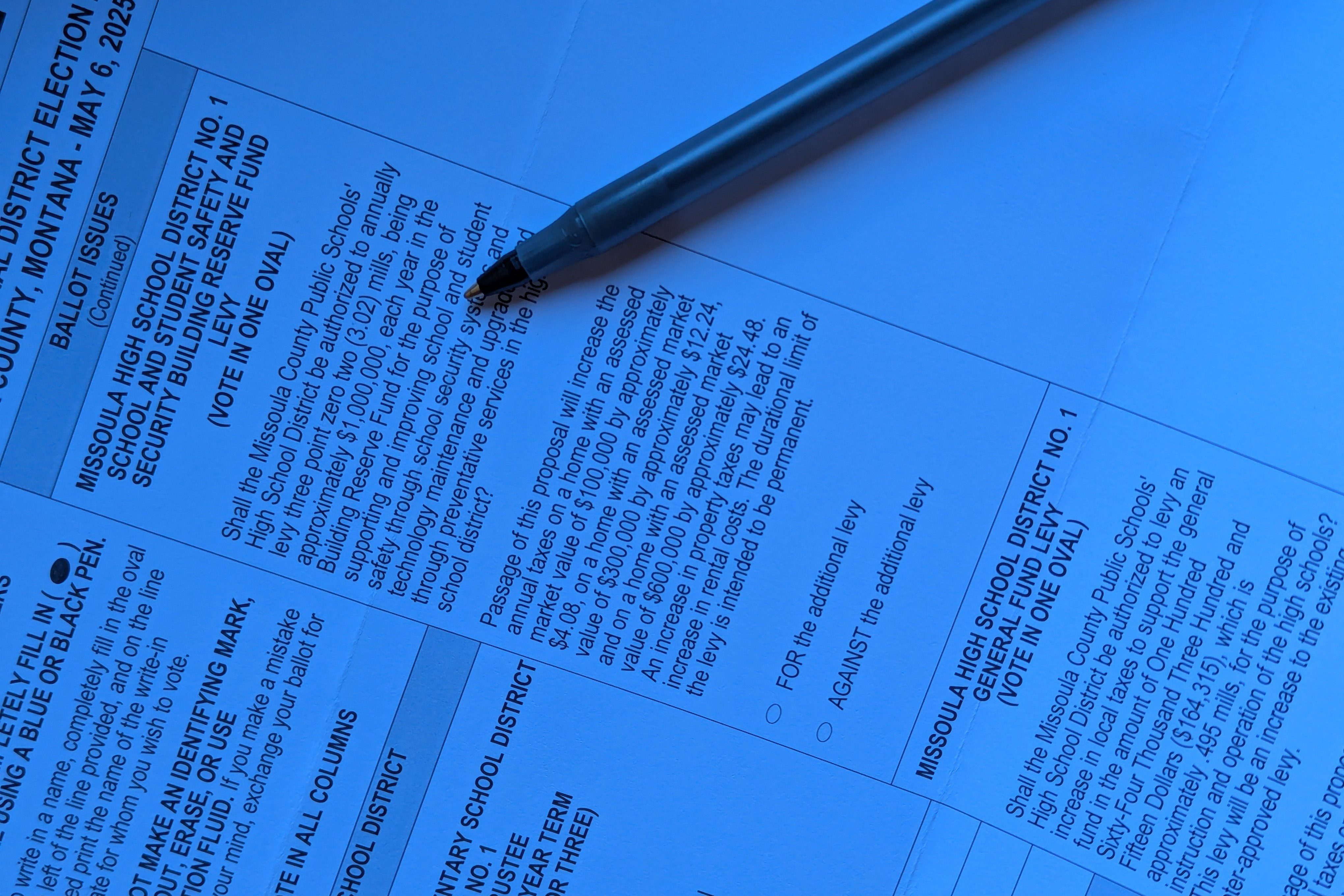
School districts ask voters to approve school levies — a fixed-term increase in property tax — to cover schools’ operational expenses that aren’t fully funded by the state.
The data, presented Thursday to a study commission examining school funding issues in advance of the 2027 Legislature, indicates that the passage rates for routine funding requests, once higher than 90%, have plummeted in recent years. That’s despite fewer districts putting those requests before voters.
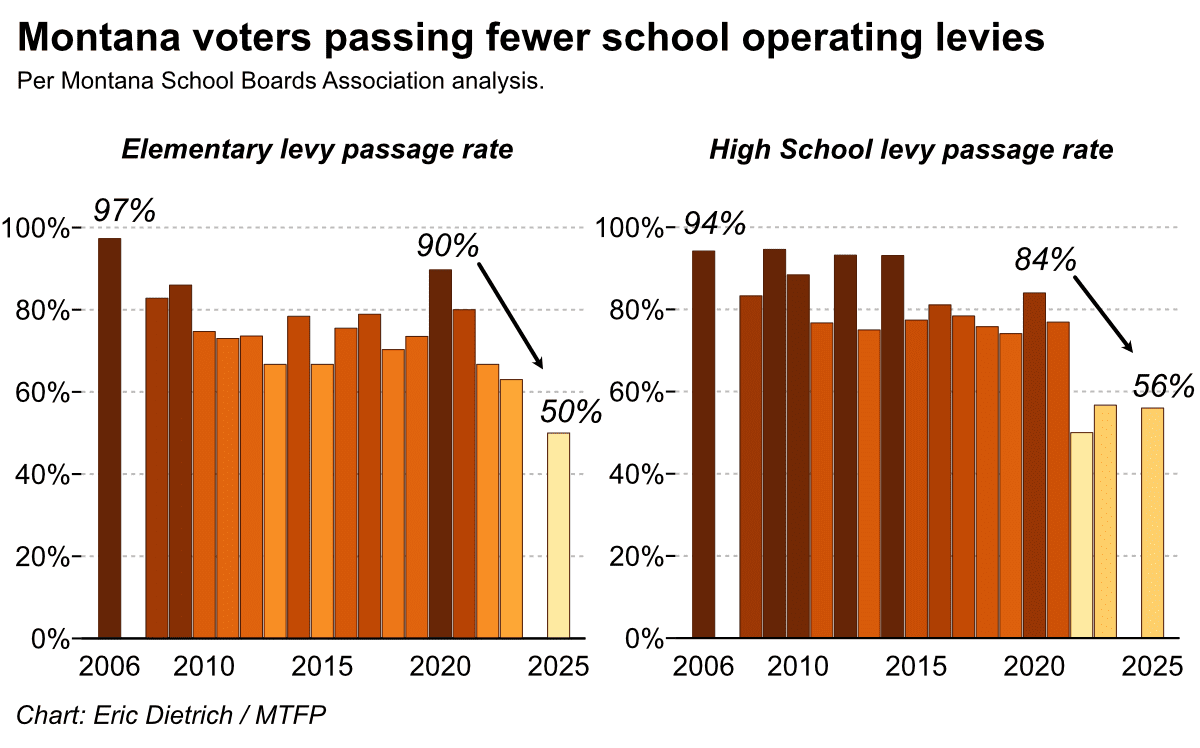
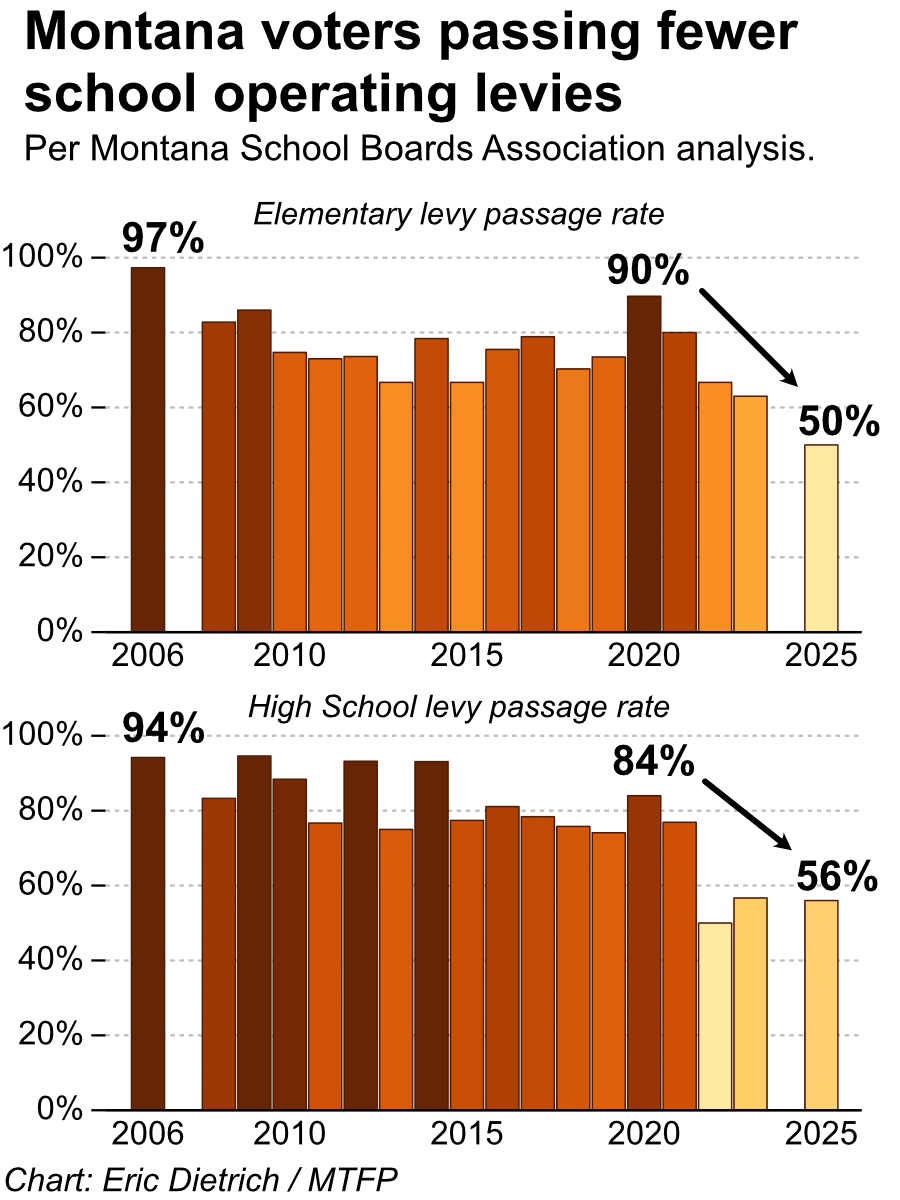
Lance Melton, the school board association’s executive director, wrote that levy passage rates began declining during the Great Recession, then accelerated during the COVID-19 pandemic.
“We’re down to a smidgeon here — we’re down to the point of ‘why are people running levies any more?'” Melton said at Thursday’s commission meeting.
The state’s complex K-12 funding formula requires school districts to put mill levy requests before their voters if they want to grow their General Fund budgets beyond a minimum threshold specified by the Legislature. Those requests, which often share a ballot with school board elections, ask voters to authorize property tax increases to channel extra money to their local schools.
In theory, the system gives voters some discretion over whether they want to prioritize extra school funding or lower taxes at a community level. However, as inflation and other factors have squeezed school budgets in recent years, Melton and other education leaders have argued that funding from voted levies is increasingly necessary to support basic services.
RELATED

How Montana pays for its public schools, in pictures
How exactly do public school districts across Montana fill their coffers? We take a picture-heavy look at the complex formula that channels cash toward classrooms from state and local sources.
In 2006, Melton’s data indicates, Montana districts proposed 73 elementary levies and 52 high-school levies, with all but five passing. Last year, districts proposed about half that number of levies — and saw nearly half of the proposals voted down.
The trend for school bonds, which typically fund major construction projects, rather than ongoing school operations, is less clear-cut, but still shows decreased voter enthusiasm for school measures over time, according to data presented to the commission Thursday.
Eleven of 12 bond measures proposed in 2016 were approved by their districts’ voters, that data indicates, compared to 9 of 16 proposed in 2025.
The school funding commission is tasked with developing recommendations for changes to the state’s school funding system that could be adopted by lawmakers next year. As the once-a-decade study progresses, some school advocates have signaled they may be preparing a court challenge that argues the state Legislature isn’t fulfilling its constitutional obligation to fund a system of “free quality” K-12 schools.
LATEST STORIES
Congressional Democrats warn Interior Dept. wildfire plan lacks details
With wildfires already raging across country, consolidated wildland fire service critics ask what problems it would solve.
A Froid mechanic was charged with illegal reentry. Here’s what that means.
The federal government charged Roberto Orozco-Ramirez, a Froid mechanic, with illegal reentry into the U.S., a felony. As the story has played out, we found ourselves wanting to know more about the illegal reentry charge. What exactly does it mean, how common is it, and what does it have to do with deportation? And what might it mean for Orozco-Ramirez and his family if he is convicted in the coming months? Montana Free Press spoke with seven criminal defense and immigration lawyers to find out.
Avalanche forecasters warn of ‘considerable’ slide risks after late-winter storm
After minimal snowfall across Montana most of the winter, the arrival of a heavy storm this week has led avalanche forecasters to warn recreators about “considerable” slide risks across several mountain ranges.