



NorthWestern Energy announced this week that it will acquire a large share of the Colstrip power plant from Puget Sound Energy, a Washington-based utility facing a mandate to stop using coal-generated power by 2025.
NorthWestern said in a press release that the acquisition will come “at no cost” to the South Dakota-based utility and “allow us to leverage existing infrastructure that is established, dependable, reliable and consistently available when our customers need energy the most.”
The announcement comes two and a half years after Northwestern announced that it had reached a similar deal with Avista, another of the plant’s six current owners. Both transfers — for Puget’s 370-megawatt share and Avista’s 222-megawatt share — are slated to occur on Jan. 1, 2026. The deal also comes as the Colstrip plant faces expensive upgrades required by the new emissions standards the U.S. Environmental Protection Agency announced in April and increasing scrutiny over its reliability following outages during recent periods of peak power demand for NorthWestern, which serves about two-thirds of the state’s energy customers.
Between its existing ownership share and the deals with Avista and Puget, NorthWestern will have a 55% ownership stake in the plant by 2026, the release said, allowing the utility to obtain something it’s long sought — greater control over Colstrip’s management.
“Majority ownership allows NorthWestern Energy to effectively guide investments in operation and maintenance of the Colstrip Plant, ensuring the plant continues to provide on-demand, 24/7 cost-effective generations for our Montana customers until viable, equivalent, carbon-free resources are commercially available,” the company wrote in the release. “Other states require a transition away from coal resources at a pace faster than is feasible in Montana. This no-cost acquisition allows our customers to transition to a cleaner energy future at a pace that works for Montanans.”
“Majority ownership allows NorthWestern Energy to effectively guide investments in operation and maintenance of the Colstrip Plant, ensuring the plant continues to provide on-demand, 24/7 cost-effective generations for our Montana customers until viable, equivalent, carbon-free resources are commercially available.”
NorthWestern Energy press release
Gov. Greg Gianforte touted the deal in the utility’s press release, describing it as “another step in securing a strong future for Montana-made energy.” Clean energy advocates, meanwhile, blasted the deal, arguing that efforts to extend the plant’s operational life will not benefit the state or NorthWestern’s customers, who are already reeling from a significant rate hike utility regulators authorized last year.
Anne Hedges, the co-director of Montana Environmental Information Center, said NorthWestern is pursuing a “terrible deal” for “an ancient coal plant that is prone to breaking down during the times when customers need it most.”
Hedges pointed to the plant’s outages during an intense cold snap that gripped the state in January and during a triple-digit heat wave in July as evidence of the 39-year-old plant’s unreliability. Asked to respond to that criticism, NorthWestern Energy spokesperson Jo Dee Black said in an email that the acquisition would give the company “the ability to ensure [the plant] remains well maintained into the future.”
Hedges said the plant will need upgrades costing $2 billion to comply with tighter pollution standards — $600 million to update its emissions-cleaning technology to comply with public health standards and at least $1.3 billion for the carbon capture and sequestration technology that would allow the plant to continue operating beyond 2032 under the EPA’s greenhouse gas rule.
Black said if an upgrade is necessary to comply with the EPA rule, NorthWestern would pay a prorated portion of the costs based on its ownership percentage. NorthWestern anticipates that the 39-year-old plant will operate until “at least 2042,” Black added.
Hedges said NorthWestern has failed to demonstrate that the additional share of the plant is required for the utility to meet its customers’ needs. Setting responsible energy rates should preclude regulators from saddling NorthWestern’s customers with the costs associated with securing power that it plans to sell to other utilities, she said.
“It has never said it needs this much power, and it doesn’t have the transmission for this power,” Hedges said. “If [the Montana Public Service Commission] allows this utility to acquire this enormous share of Colstrip … then the commission is not doing its job. It is allowing NorthWestern to gamble with our money in electricity markets — and that is a no-no. That is not the way the system is supposed to work.”
Edward Barta, chair of Northern Plains Resource Council, another group critical of NorthWestern’s reliance on fossil fuels, described the acquisition in an emailed statement as “fiscally irresponsible.”
“If [the Montana Public Service Commission] allows this utility to acquire this enormous share of Colstrip … then the commission is not doing its job. It is allowing NorthWestern to gamble with our money in electricity markets — and that is a no-no.”
Anne Hedges, Montana Environmental Information Center
“We deserve affordable energy sources that set our communities up for prosperity in the 21st century,” Barta said. “Instead, NorthWestern wants to recreate the robber-baron era where corporate monopolies grow bigger and richer no matter the costs to the rest of us.”
Through the end of 2024, NorthWestern anticipates spending more than $21 million on operation and maintenance costs under the plant’s current ownership structure, according to Lucas Hamilton, chief legal counsel for the PSC. Coal costs to fuel the plant from July 2024 through June 2025 are currently estimated at $31.5 million, Hamilton added.
This isn’t the first time NorthWestern and Puget have attempted to transfer the ownership of the Colstrip plant. Late in 2019, NorthWestern announced a plan to buy Puget’s share of Colstrip for $1. Within a year, that deal disintegrated due to friction with utility regulators in Washington and a dispute among the plant’s co-owners. (Plant operator and co-owner Talen Energy had opposed the deal, arguing that it had a first right-of-refusal to purchase a portion of Puget’s ownership stake in the 500-kilovolt transmission lines leading out of Colstrip.)
As recently as 2023, Puget had reached a deal with Talen for its Colstrip share, but that deal quietly fell apart. A spokesperson for Talen did not return Montana Free Press’ request for comment.
A Puget spokesperson wrote in an email to MTFP that it will retain its ownership share of the transmission line leading out of Colstrip.
Those transmission lines will be critical to moving Puget’s growing portfolio of Montana wind energy to its customers in western Washington. Earlier this month, Puget announced it had reached an agreement to buy power from a 315-megawatt wind farm under development near Two Dot. Puget is currently building another large wind farm near Rapelje and has a contract for a portion of the wind power coming from the Clearwater Wind Project, the largest wind farm in Montana.
RELATED
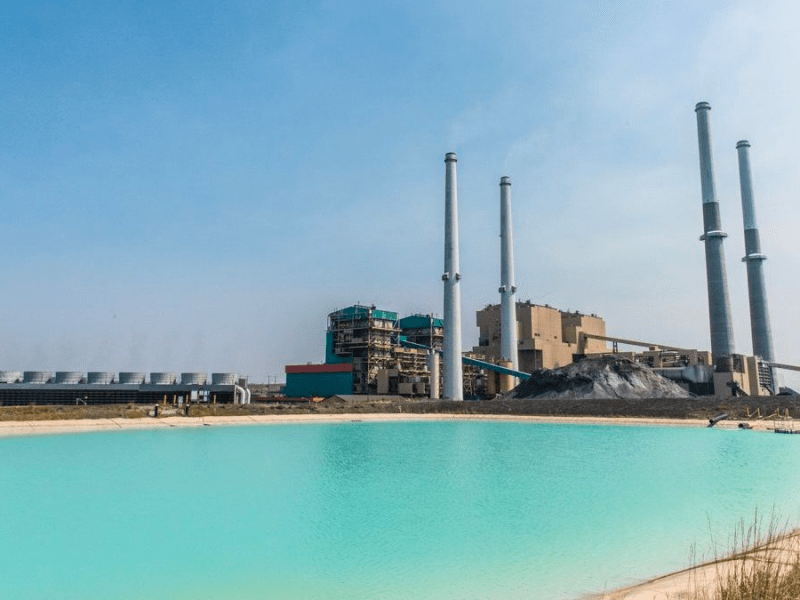
Colstrip owners turn to recent Supreme Court ruling that weakens EPA
Colstrip Power Plant owner Talen Energy, in its battle against tougher air pollution laws, is turning to a recent Supreme Court ruling weakening the EPA’s courtroom clout.
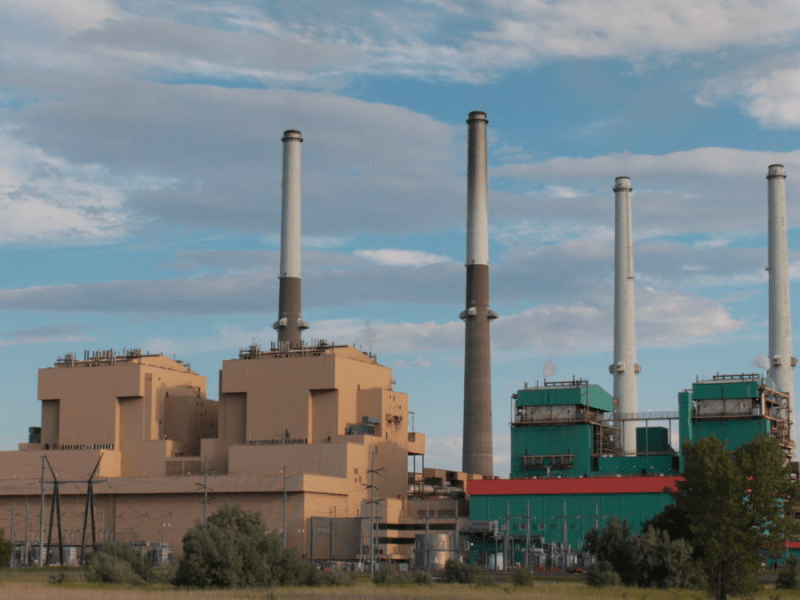
Montana petitions Supreme Court to block EPA’s new pollution standards
The Montana attorney general, along with 19 of his colleagues in other states, asked the nation’s highest court to order an emergency stay of a rule the U.S. Environmental Protection Agency adopted in April to curtail greenhouse gases emitted by fossil fuel plants.
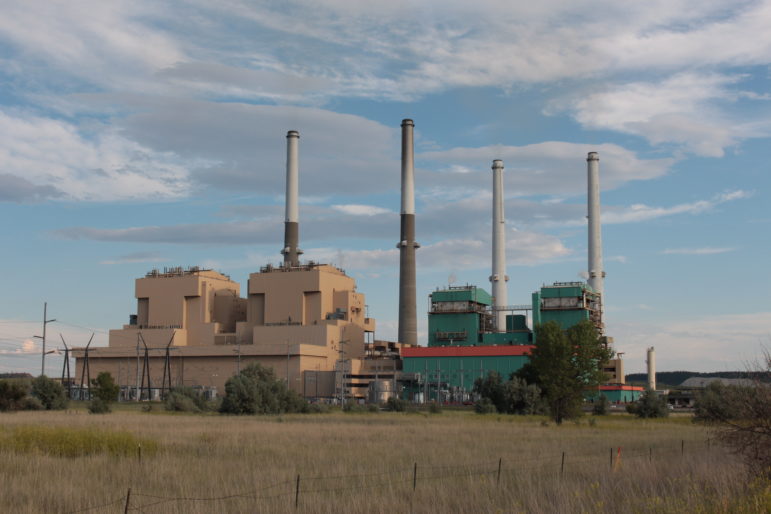
NorthWestern Energy to increase ownership share in Colstrip
NorthWestern Energy said Monday it will acquire Washington-based utility Avista’s ownership stake in the aging Colstrip coal power plant, a move the company said would keep the plant in operation through the end of the decade.
It’s not yet clear whether utility regulators in Montana or Washington will review the transfer’s compliance with those states’ regulatory requirements. In an email to MTFP, a spokesperson for Puget said that the company has been “speaking with our commissioners about this process and will continue to coordinate with the agency and work with NorthWestern to effectuate the exit of PSE as part of our transition of Colstrip in compliance with state law.” Black said NorthWestern does not believe that the acquisition requires commission approval.
Given scant details about the acquisition, it’s difficult to assess the commission’s regulatory role in the matter, Montana Public Service Commission Executive Director Dave Sanders told MTFP.
“I haven’t seen the exact details of the deal, so I don’t want to give a definitive answer at this time, but if it’s a matter of a private purchase agreement and doesn’t have any other implications, normally that would not require commission approval,” Sanders said, adding that NorthWestern’s 2023 deal with Avista did not immediately trigger commission oversight. (When the 2019 deal was announced, NorthWestern said it would seek preapproval from the PSC for the acquisition.)
“The commissioners are just hearing about this now,” Sanders said. “I think when details come out and the staff are able to brief the commissioners, the commission will be able to make a decision about what, if any, actions to take.”
Sanders also said that while the commission has not intervened to block the tighter pollution standards the EPA announced in April, he’s aware that Montana has opposed them. The standards have thus far survived the legal challenges brought by Republican-led states and industry groups.
“We’re obviously going to have a very close look at all of this because these are significant developments in Montana’s energy present and future,” Sanders said.
This story was updated Aug. 2, 2024, to correct the date of the pending ownership share transfer.
LATEST STORIES
Glacier National Park eliminates ticketed-entry system
Glacier National Park announced that it is ending its ticketed-entry system, which has dictated summer access to some of the park’s most popular areas for the past five years. Instead, it will introduce new parking limits at Logan Pass and a reservation system for shuttle buses along the Going-to-the-Sun Road.
Where Montana cities stand on ICE and immigration enforcement
A Helena resolution limiting police cooperation with federal immigration authorities is under investigation by Montana’s attorney general, who says it may violate a 2021 state law requiring local governments to share immigration-status information and honor certain federal requests. The dispute underscores potential tensions in communities that take a variety of approaches to immigration enforcement.
Licensing rules for 176,000 Montana jobs up for discussion as Gianforte preps for 2027 Legislature
Licensed as a nurse, funeral director or contractor? Rules that apply to those and Montana’s other professions could change as Republicans take aim at alleged red tape.