

Last April, Montana found itself in the national spotlight as history unfolded at the state Capitol in Helena. On April 18, first-term Rep. Zooey Zephyr, D-Missoula, a trans woman, rose to speak in opposition to Senate Bill 99, which would ban transition-related medical and surgical care for transgender minors. (As of mid-February, the law is temporarily enjoined while litigation continues.) “The only thing I will say is if you vote ‘yes’ on this bill and ‘yes’ on these amendments, I hope the next time there’s an invocation when you bow your heads in prayer, you see the blood on your hands,” Zephyr said, in reference to high suicide rates among trans minors.
Her comments sparked a series of increasingly dramatic events. After she refused to apologize, Speaker of the House Rep. Matt Regier, R-Kalispell, barred Zephyr from speaking on the House floor. On April 24, protesters assembled in the House gallery, demanding that Regier restore Zephyr’s speaking privileges. Montana Highway Patrol officers arrested seven protesters in the House gallery (all charges against them were eventually dropped). Two days later, on April 26, the House voted to bar Zephyr from the House chamber for the remainder of the session, though she could continue to vote on bills remotely.
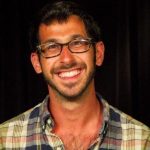
As those events unfolded, filmmaker Kimberly Reed began gathering footage, first from afar with the assistance of two colleagues, and then on the scene herself. Instead of trying to capture every dynamic of the story, she largely kept her focus on Zephyr, whom she first met on the bench outside the House chamber where the lawmaker had been relegated following her censure.
On Sunday, the culmination of Reed’s work, the 15-minute film “Seat 31: Zooey Zephyr,” will make its world debut in Missoula as part of the 2024 Big Sky Documentary Film Festival.
A trans woman, Reed has spent much of her career crafting stories that center and explore trans identity, including her own. She directed 2010’s award-winning and autobiographical “Prodigal Sons,” as well as an episode of the HBO series “EQUAL.” She has served as an executive producer of several other projects, including the HBO documentary “Transhood.” And Reed doesn’t limit herself to the documentary form — she wrote the text for the lauded 2014 opera “As One.”
Montana Free Press readers may also recognize Reed, who grew up in Helena and now lives in New York, as the director of 2018’s “Dark Money,” which followed, in part, the origins of this publication. (Following a reprise screening this year of “Dark Money,” the Big Sky Documentary Film Festival will host a talk-back session with Reed and MTFP founder and “Dark Money” subject John Adams in conversation with Big Sky Film Institute Executive Director Rachel Gregg after the film’s 5 p.m. screening on Sunday Feb. 18.)
Read along as Reed offers insights into the process of making “Seat 31,” explains her goals when it comes to telling stories about trans people, and highlights some of the footage left on the cutting room floor.
MTFP: Can you tell me a bit about how “Seat 31” came to be? Were you already in Helena when these events began to unfold?
Kimberly Reed: After making “Dark Money,” I’ve tended to keep a pretty close eye on the legislative sessions. Even though I don’t live in Montana right now, it’s still very close to my heart. I go back there all the time. My mom lives there. I saw what was happening with the session in general, and this particular issue with Zooey, which hit the national news really intensely.
It didn’t seem like it was going to subside at all. The whole episode was coming just a few weeks after the silencing of two black legislators in Tennessee, and one white legislator. It just seemed like this was a powder keg.
[But] I couldn’t run up there to Montana right away to film things. So I took advantage of some of the connections and contacts I had working at the Capitol and I was able to line up some other people to film for me. So the first couple days were covered by Mike Clark, an AP photographer, and Justin Lubke, a cinematographer I’d worked with before. It was the first time that I’d ever been in a situation where I was directing over the phone [laughs].
It was clear that we had to move really fast to get there and cover the story.
MTFP: So when did you arrive in Helena? What are your memories of the Capitol at that time?
Reed: The Capitol is always a bit of a pressure cooker, but it was pretty clear that there was a lot of tension in that building.
The day that I arrived was the day after Zooey had the bench she was using taken, the famous “Benchgate.”
So when I arrived there were some folks that referred to themselves as the “Blue Bench Brigade” that were trying to take back the bench for Zooey.
But the main thing that happened that day was that the Senate declared sine die. It happened extremely quickly and it took a lot of people by surprise. Voting to pack up and go home created a lot of turmoil in the building as well. But I have to say that the overriding emotion that I was connecting to was the way Zooey was responding to so much of this stress and so many of these attacks. And she was doing so in such an elegant, flexible and joyful manner.
MTFP: I was wondering if you reached out to House Speaker Regier or House Majority Leader Vinton for an interview as part of this project?
Reed: No. It always seemed like the best structure for this was to center the story of Zooey, the story of a trans person, to own that point of view and not pretend like this is going to be an all-encompassing history of these events from a detached point of view.
related

House Republicans bar Democratic Rep. Zooey Zephyr for breaching decorum
The Montana House of Representatives has voted on party lines to discipline Missoula Democratic Rep. Zooey Zephyr, barring her from the chamber’s floor, anteroom and gallery for the remaining few days of the 68th Montana Legislature.
MTFP: I’m painting in broad strokes here to avoid spoilers, but I think it’s fair to say that “Seat 31” starts in a place of extreme conflict and ends in a place of joy. How did you approach the narrative arc of the story?
Reed: It’s a love story. And I’m betting that hardly anybody who views this will have ever witnessed a love story between two trans folks.
This was aiming towards a story about the relationship between Zooey and her partner, Erin [Reed], who was coming to town, and to do so in a surprising way, too, right? To show that love and joy and connection can grow out of these fraught moments.
So often with trans stories, the storyline goes something like, “Look at these poor people, they deserve your pity and your help and your empathy.” There’s a lot of situations in which I think that’s really true, and I wish that the larger cis, straight population was more sensitive to those issues, but that’s not all we are. That’s not the only storyline, and I’m very interested in telling stories about trans folks that center joy and love and positivity and optimism. That is Zooey’s modus operandi.
MTFP: Was there any footage that didn’t make the final version of the film that was a particularly challenging decision to cut?
Reed: For the most part, the film is comprised of cinema verité moments — a lot of times people refer to it as fly on a wall. I also thought it would be important to film interviews with Zooey and her partner, Erin Reed, and also Rep. SJ Howell.
You see a glimpse of the interview with Zooey in the first couple shots of the film, but, you know, cinema verité is powerful, and that’s what the film [emphasizes]. Including an interview with Erin just didn’t fit within the film that we were making. And that was a hard decision to make. [Editor’s note: Erin Reed appears in the film, but is not interviewed.]
Erin is just on top of so much of this stuff and she’s such an incredible resource for so many people. If you want to follow the latest news about trans issues across the country, Erin is one of the very best resources that we have.
MTFP: Before we wrap up, is there anything you’d like to highlight about the significance of the film debuting in Missoula?
Reed: I feel like folks who live in Missoula maybe aren’t aware of just how well-regarded and respected and prestigious the Big Sky Documentary Film Festival is. So to have the film premiere there is an honor.
I also love the fact that it’s Zooey’s hometown, this kind of touching glimpse of Zooey’s life in her hometown.
This conversation has been edited for length and clarity.
latest stories
75% of voters want Montana to have at least as much federal land as it does now
Federal land transfer has been a party of the GOP party platform at both the state and national level, but a recent MTFP-Eagleton poll indicates that a majority of Republican voters oppose reducing the amount of land in federal ownership.
Secretary of State Christi Jacobsen joins contest for Zinke’s western U.S. House District seat
Jacobsen made her announcement on Facebook with a campaign video portraying her as both a political outsider and the favorite of Donald Trump.
Montanans want more solar, natural gas development, are less interested in new coal plants
The poll results on Montana’s energy mix come as politicians and policymakers grapple with surging electricity demand spurred by investment in artificial intelligence and the data centers that support it.