

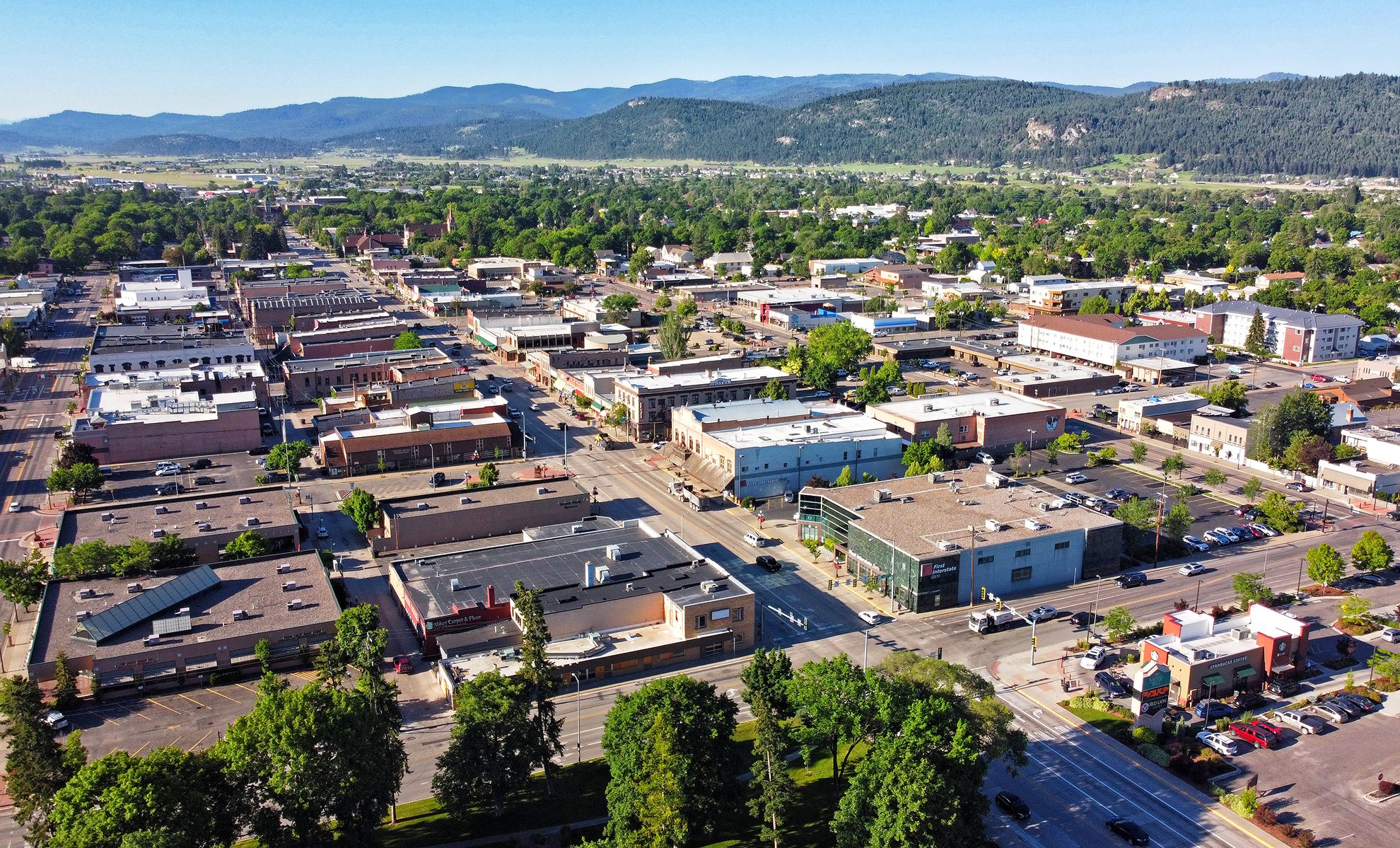
It started as an anecdote: rumors of canceled reservations and worries that rising tensions, triggered by President Donald Trump’s trade war with Canada, might deter visits to Montana. But eight months later, the concern is now supported by real data, especially in the Flathead Valley, which has long depended on Canadian tourism to bolster local coffers.
According to the Kalispell Chamber of Commerce, credit card spending by Canadians in Kalispell has decreased by 39% through the end of September compared to the same period last year. Traffic at the Rooseville border crossing, the closest port to the Flathead Valley, has also declined this year. In August 2024, according to the Bureau of Transportation Statistics, 69,049 people crossed from Canada to the United States. A year later, that number shrank to 54,640, a 20% drop. Total border crossings from Canada to Montana fell 26% from 286,659 in August 2024 to 210,927 in August 2025, the most recent month for which data is available. The decline reflects a national trend.
For hotels and other businesses in the Flathead Valley that rely on tourism, these declines have led to more vacancies and less income. Mitchell Bump, the general manager of the Kalispell Grand Hotel in downtown Kalispell, had little doubt about what caused the decline.
“We’ve seen a big decrease in Canadian visitors this year due to the political environment,” he said. “But we want Canadians to know that they are still welcome in Kalispell.”
Total border crossings from Canada to Montana fell 26% from 286,659 in August 2024 to 210,927 in August 2025.
Canada and the Flathead Valley have long enjoyed a close relationship. For decades, the Flathead Valley has been a popular destination for Canadians, especially Albertans, looking to stretch their dollar at American department stores or hit the slopes in the winter. Many even bought second homes in the area, with places like Meadow Lake Resort near Columbia Falls becoming unofficial Canadian enclaves (or “Little Canada” as one researcher described it). There were even T-shirts declaring Whitefish to be “Canada’s Tijuana.”
That close connection was tested during the pandemic and the subsequent border closures. Many Canadians sold their homes in the Flathead Valley. When the border reopened, many of the Canadians who returned found that they weren’t the only ones attracted to the Flathead, which was experiencing a significant increase in domestic visitors due to America’s renewed interest in wide-open spaces and national parks.
Although Canadians made up a smaller portion of the visitors, Bump at the Kalispell Grand Hotel said they still remain an important part of the equation for tourism-dependent businesses. While most visitors arrive during the summer or winter, Canadians have traditionally been year-round travelers, he said, helping to keep hotels, restaurants and stores busy during the slower times of the year.
However, Canadian tourism to the United States has suffered this year due to the president’s trade war and his threats to turn Canada into the “51st state.” While other countries have managed to secure new trade deals with the U.S., Canada has not, and negotiations were suddenly stopped last month when the government of Ontario released a TV ad featuring former President Ronald Reagan speaking out against tariffs. Trump lambasted the ad as a fake, although The Wall Street Journal concluded the ad largely reflected Reagan’s views on tariffs.
According to the U.S. Travel Association, Canada has traditionally been the top source of international visitors to the U.S., with 20.4 million visits in 2024, generating $20.5 billion in spending. However, due to tensions between the two countries, many Canadians chose not to travel south this year. And that’s a problem for places like Kalispell.
“It’s a market that benefits Kalispell year-round, so the absence of Canadians is especially noticeable outside of the busy summer tourism season,” said Diane Medler, executive director of Discover Kalispell.
In hopes of reviving that market, Discover Kalispell launched what it called the “Kalispell Canadian Welcome Pass” earlier this month. The pass is an app that can be downloaded onto a phone and offers discounts to travelers from Canada. So far, 15 local businesses have signed up for the program, including the Kalispell Grand Hotel, which is offering a 10% discount to those from north of the border. Bump said it was an easy decision to join the program.
Medler said she has heard from numerous Kalispell hotels that have lost business this year because of tensions between the two countries. Some of the biggest losses have come from youth baseball and hockey teams that withdrew from tournaments in the U.S. this year. While she said it would be difficult to replace that business, she remains hopeful that some Canadian neighbors will take Kalispell up on the offer.
“We respect their feelings and opinions, but we also want to keep our welcome mat out,” she said. “We want people to know that despite everything that is happening, Kalispell still welcomes Canadians.”
LATEST STORIES
75% of voters want Montana to have at least as much federal land as it does now
Federal land transfer has been a party of the GOP party platform at both the state and national level, but a recent MTFP-Eagleton poll indicates that a majority of Republican voters oppose reducing the amount of land in federal ownership.
Secretary of State Christi Jacobsen joins contest for Zinke’s western U.S. House District seat
Jacobsen made her announcement on Facebook with a campaign video portraying her as both a political outsider and the favorite of Donald Trump.
Montanans want more solar, natural gas development, are less interested in new coal plants
The poll results on Montana’s energy mix come as politicians and policymakers grapple with surging electricity demand spurred by investment in artificial intelligence and the data centers that support it.