


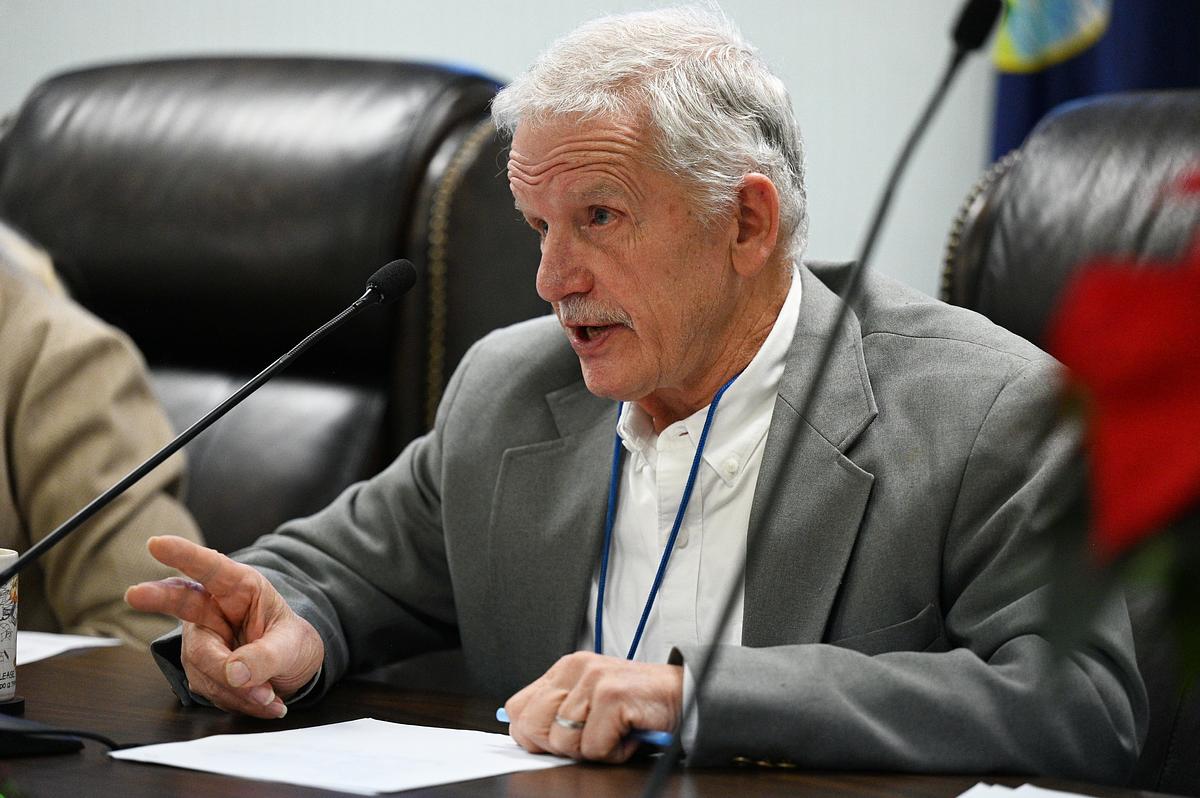
State utility commissioner Brad Molnar can keep his job. For now.
With an internal agency investigation into alleged workplace misconduct by Molnar still pending, Gov. Greg Gianforte has denied another commissioner’s request to suspend Molnar from his role.
Gianforte said in a Dec. 26 letter he had determined that the evidence available to him doesn’t meet the “good cause” standard necessary to employ a rarely used section of state law that gives the governor power to temporarily suspend utility commissioners. That law allows the governor to replace an elected commissioner with a pick of his choice.
Molnar said in a Monday interview with Montana Free Press that he had wept with relief upon learning about the governor’s decision. He also said that it proves critics haven’t been able to produce firm evidence to back up their claims that he had harassed his colleagues.
“They haven’t brought forward any proof of any allegations at any level in seven months,” Molnar said.
The request to suspend Molnar, put to Gianforte by commissioner Jennifer Fielder in August, spun out of a monthslong agency investigation into Molnar’s conduct. Specific details of the original accusations against the utility commissioner haven’t been made public. Fielder’s request to the governor also accused Molnar of trying to stymie the investigation, retaliating against “those who exercise their rights to a workplace free from harassment and discrimination.”
At a public meeting in early September, the agency’s top staffer, Executive Director Alana Lake, also said that Molnar had threatened “to take out anyone who was involved in the process against him.”
“I have been sworn at. I have been yelled at. I have been disparaged for hiring an outside investigator to address the issues,” Lake said. (Lake, hired as the commission’s top staffer in March, was picked to be Helena’s next city manager earlier this month.)
Gianforte wrote last week that his decision to let Molnar continue serving was focused narrowly on whether suspension was necessary to keep the commissioner from interfering with the investigation.
“To be clear, this decision does not excuse the alleged conduct of Commissioner Molnar,” the governor wrote. “The Commission can complete its investigation of his conduct and render a decision of its own using the tools available to it in its policy manual.”
Molnar is one of five elected Public Service Commissioners who lead the state agency tasked with striking a fair balance between consumer pocketbooks and the business interests of power companies, garbage haulers and some other utility companies with monopoly service areas that limit consumer choice. The commission’s most prominent regulatory subject is NorthWestern Energy, which is currently working to provide service for massive data center projects and seeking commission approval for a merger with a South Dakota utility.
Molnar, a longtime Republican maverick from Laurel who has rankled fellow Republicans on topics ranging from utility regulation to charter schools, was elected to his most recent four-year term on the Public Service Commission in 2024. His fellow commissioners, all Republicans, selected him as the body’s president before his working relationship with a majority of them apparently soured.
Fielder formally requested Molnar’s suspension by the governor in an Aug. 20 letter that accused Molnar of using his position as commission president to stymie the ongoing investigation. After failing to persuade fellow commissioners to retract the letter, Molnar sued to block his potential suspension, losing an October court ruling.
Molnar said Monday that the root of his conflict with Fielder was his refusal to sign a revised internal commission policy manual that he believed didn’t guarantee him adequate due process rights. He has also previously derided the investigation as the result of him telling “a joke somebody didn’t like.”
Fielder didn’t respond to phone and email inquiries from MTFP Monday.
Molnar was stripped of his PSC presidency via a 3-2 commission vote in October, leaving him a standard commissioner without extra responsibilities. That shift removed Molnar’s ability to set commission agendas without support from other commissioners.
Gianforte’s letter from this month indicates that the team of staffers and commissioners conducting the internal investigation is supposed to conclude “this month,” with recommendations possibly considered by the full commission in January.
An agency spokesperson declined to answer questions from MTFP on the status of the investigation Monday, citing policy not to comment on “internal personnel matters.” The spokesperson, Jamey Peterson, did say the investigation team “plans to meet early in the new year to determine next steps.”
Molnar said Monday that he has “no idea” if the investigation is complete.
The investigation into Molnar’s conduct comes as the commission considers weighty issues that will affect the approximately 400,000 Montanans reliant on NorthWestern Energy for electric service, including the merger proposal, data center development and the company’s plan to substantially increase its ownership share of the aging Colstrip coal power plant.
The Public Service Commission has wrestled for years with political infighting, staff turnover, inadequate financial controls and office culture issues. In one case, the agency paid a former commissioner a $155,000 settlement after work account emails where he discussed highly personal details of his family life were leaked to a right-wing blog. In another, it paid a $175,000 settlement to its former chief legal counsel, who alleged that he had been terminated after refusing to expose an employee who alerted state auditors to unauthorized expenditures.
Utility commissioners are paid $128,260 a year, with a higher $134,163 salary for the commission president.
Some lawmakers have argued the agency would do its job more effectively if its members were appointed by the governor instead of elected. A bill that would have switched three of five commission seats to gubernatorial appointments passed the state Senate before failing in the House this year, leaving Montana one of 10 states where voters elect the entire utility commission.
Molnar said Monday that he worries the drama surrounding him could boost supporters of an appointment model, which he believes would empower business interests over the public.
“Whoever donates the most money to the governor when he wins gets to appoint those seats — and it’s always the utility,” he said.