

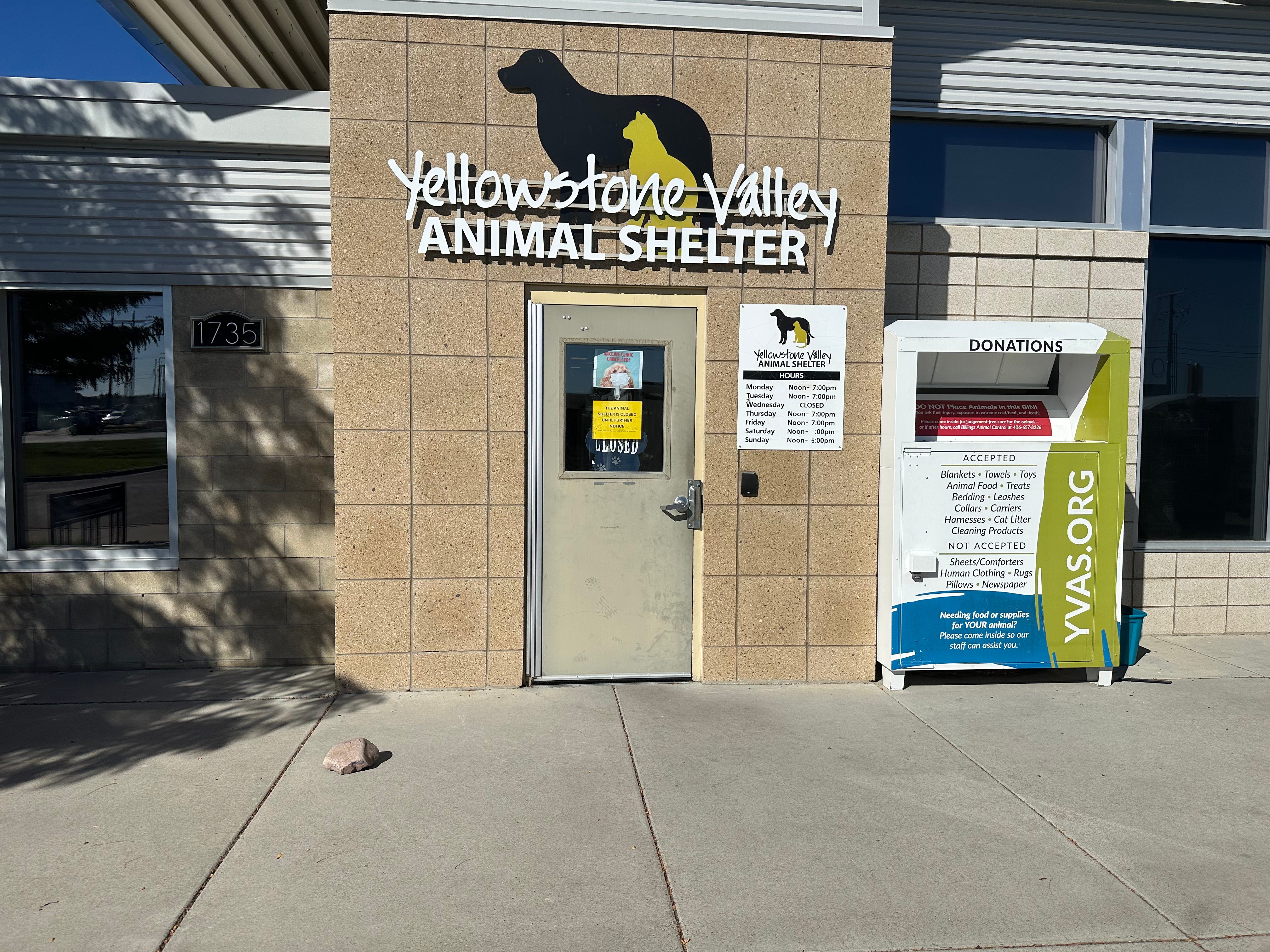
The city of Billings’ move to allow law enforcement to burn 188 pounds of methamphetamine at its publicly run animal control center in September did not violate clean air laws, according to the outcome of a recent state investigation.
The state Department of Environmental Quality confirmed Tuesday that Billings’ use of the animal incinerator for drug burns “is permissible on a case-by-case basis.” But the agency’s investigation found that inadequate operations of the crematorium had led to poor pollution control and multiple instances of low temperatures during burns. Those errors did constitute violations of state regulations, the investigation found.
The city could face civil fines and penalties up to $10,000 for each violation, according to a Nov. 19 letter from the state obtained by Montana Free Press through a public records request. The state said it would notify the city of Billings “before proceeding with a formal enforcement action,” and gave the city 15 days to provide a response.
DEQ spokesperson Madison McGeffers said the agency had not received a reply from the city as of Tuesday afternoon. The city also did not immediately respond to a request for comment from MTFP about the outcome of the investigation.
DEQ’s inquiry was prompted by a September law enforcement drug burn mishap at the city’s animal crematorium. The malfunction spewed incinerator fumes throughout the building, forcing evacuations and hospitalizing several people.
Most of the sickened people were employees of the Yellowstone Valley Animal Shelter, a nonprofit animal rescue center that rented space in the same building as the animal crematorium. The organization announced in October that it would not be returning to that location, citing smoke damage from the drug burn.
According to the DEQ, the violation related to the September drug burn had to do with the “operational conditions” at the city’s incinerator that caused the release of emissions. While the letter did not specify what type of drugs were burned, McGeffers later confirmed to MTFP that county officials had informed DEQ “that all of the 188 lbs of illegal drugs was methamphetamine.”
The Sept. 10 burn of materials was requested by the Billings Police Department and the Federal Bureau of Investigation and overseen by the Billings Animal Control division, the state investigation said.
“During the burning of these materials, operational conditions creating a negative pressure environment resulted in the back-flow of crematory emissions into the [Billings Animal Control] building,” the DEQ letter said. “This event exposed a number of personnel and animals within the building to potentially harmful emissions.”
One of the city’s violations had to do with the operations that created the “negative pressure environment” on Sept. 10, the DEQ report found. Instead of being funneled through the incinerator’s secondary burn chamber, the emissions flowed back into the building.
“Such operations did not satisfy the requirement to operate the equipment to provide the maximum air pollution control for which it was designed,” the state said.
But two other categories of violations had to do with inadequate temperature controls dating back to 2023. In 17 instances involving both animal and drug incineration, the state found that the Billings animal crematorium failed to use auxiliary fuel burners to heat up the incinerator’s second chamber. In turn, the temperature in the secondary chamber fell below the required 1400-degree Fahrenheit during operations.
Those 17 instances of temperature violations did not include the burn on Sept. 10, the DEQ report showed. But at least one low-temperature event occurred during a burn of 61 pounds of unspecified drugs on July 23, 2025.
McGeffers, with DEQ, said the state had also looked into the process for approving alternative burns at registered incinerators, such as drug burns at the animal crematorium. The state had contracted out that oversight responsibility to RiverStone Health, the county health department.
RiverStone was the agency that authorized the animal crematorium to be used for the illegal drug burn in September. In this instance, McGeffers said, “DEQ did not identify violations” related to RiverStone Health’s actions.
In a statement after the September malfunction, RiverStone said that local law enforcement and animal control officials had properly requested approval “and safely completed the destruction of ‘illegal drugs’ several times a year, without incident.”
But the health department said it had not been told that the illegal drugs to be burned in September included methamphetamine.
In response to Tuesday questions from MTFP, RiverStone Health CEO Jon Forte said that the county was in the process of revising its contract with DEQ and that the state would be handling the approval of alternative burn requests going forward.
“DEQ found no issues or errors in our inspection protocol or reports. The results of the investigation focused on burning of materials and the operation of the incinerator,” Forte said in an emailed statement.
“Although the findings did not identify any lapses in protocol at RiverStone Health, we have done a thorough review of our contractual pollution control obligations with DEQ,” Forte added. “… We will continue to inspect air pollution sources in Yellowstone County, and our staff are certified biannually by a third party to inspect emissions.”
LATEST STORIES
How Trump tariffs jolted Montana coffee roasters
The first year of President Donald Trump’s second term is giving Helena coffee roaster Steven Ladefoged the wrong kind of jitters.
Gianforte extends deadline for landlords to avoid second-home tax
Gov. Greg Gianforte that a “technical glitch” has spurred the state to extend an application deadline that thousands of Montana landlords need to meet in order to avoid the state’s new second-home tax. The deadline, which had been set for March 1, has now been pushed back to midnight on March 20.
Montana ranks 7th for U.S. Olympians per capita
Montana ranks seventh in the nation for the number of Olympic athletes by birthplace on a per-capita basis since 1924, placing the state behind Alaska and New Hampshire and ahead of New York and Rhode Island.