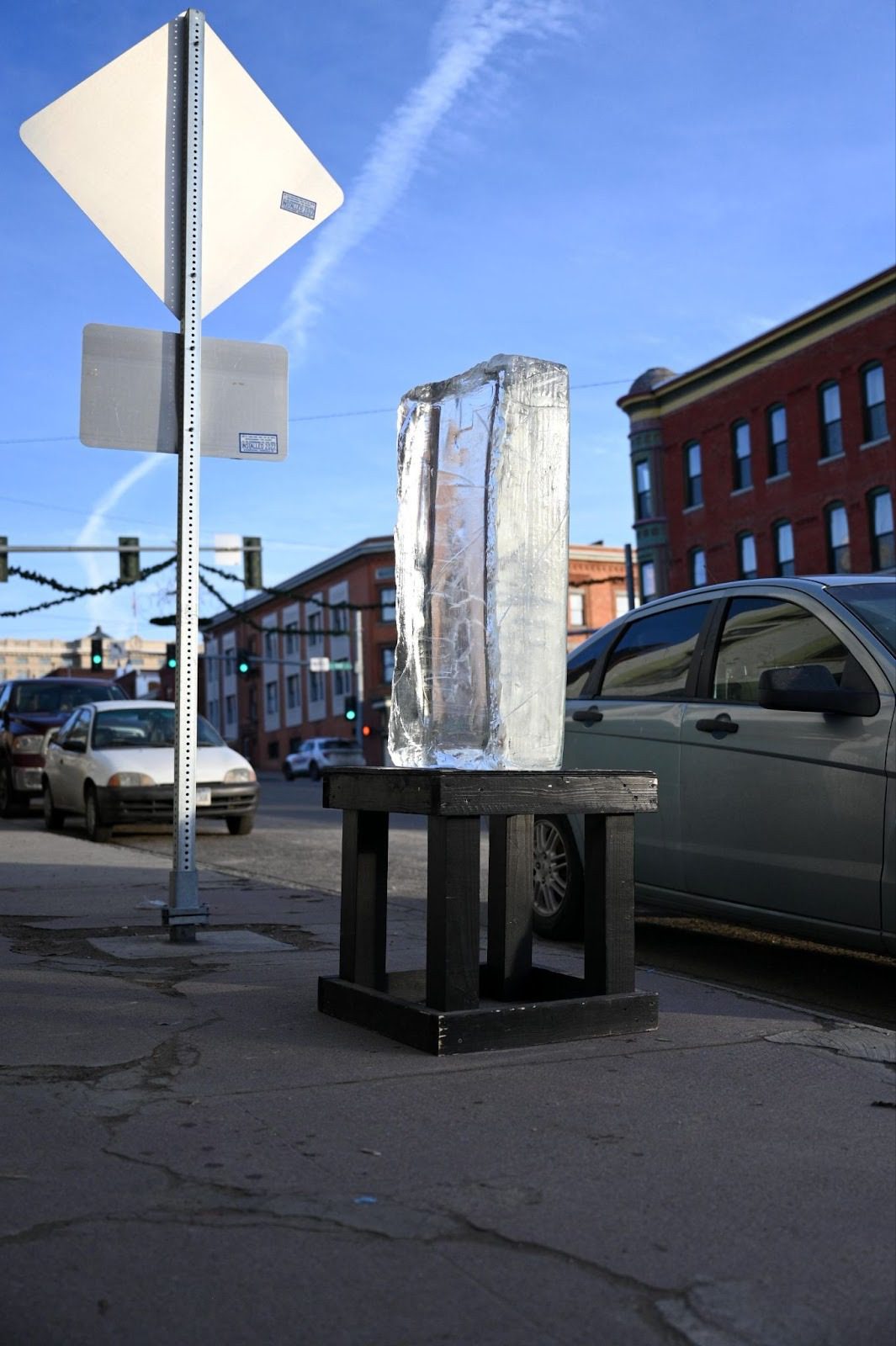

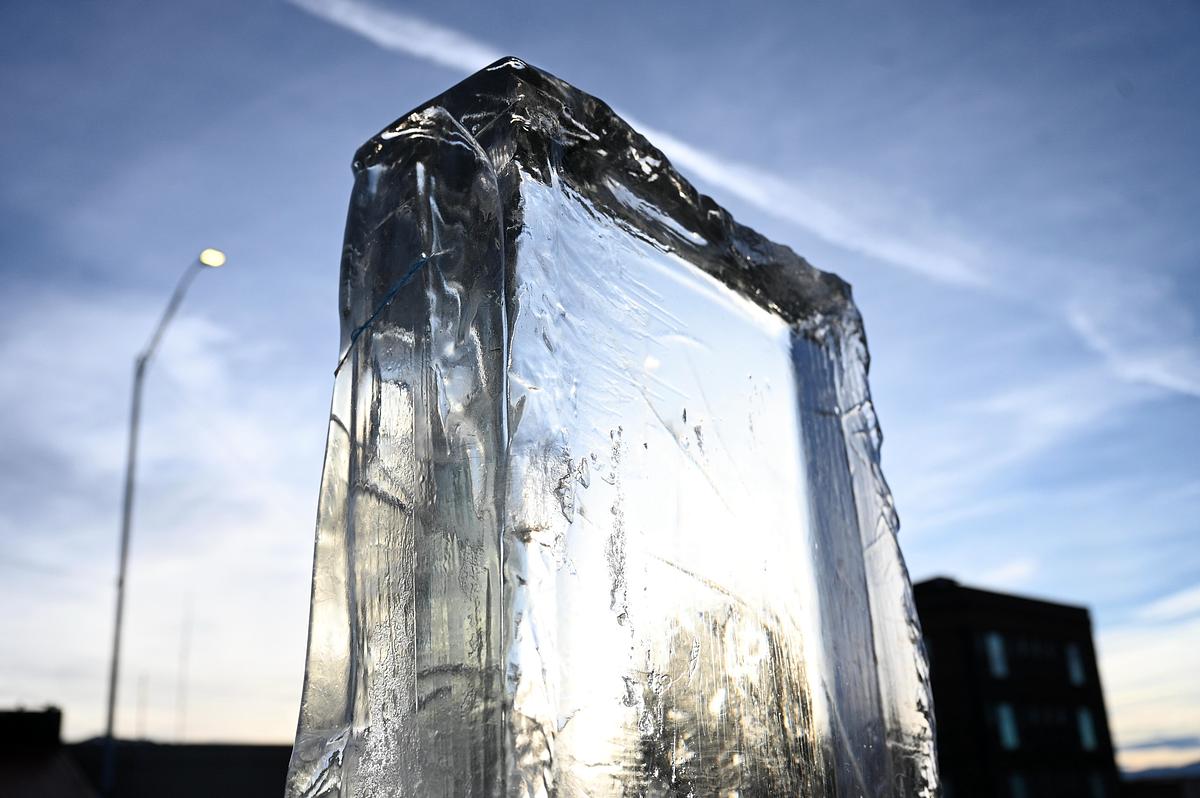
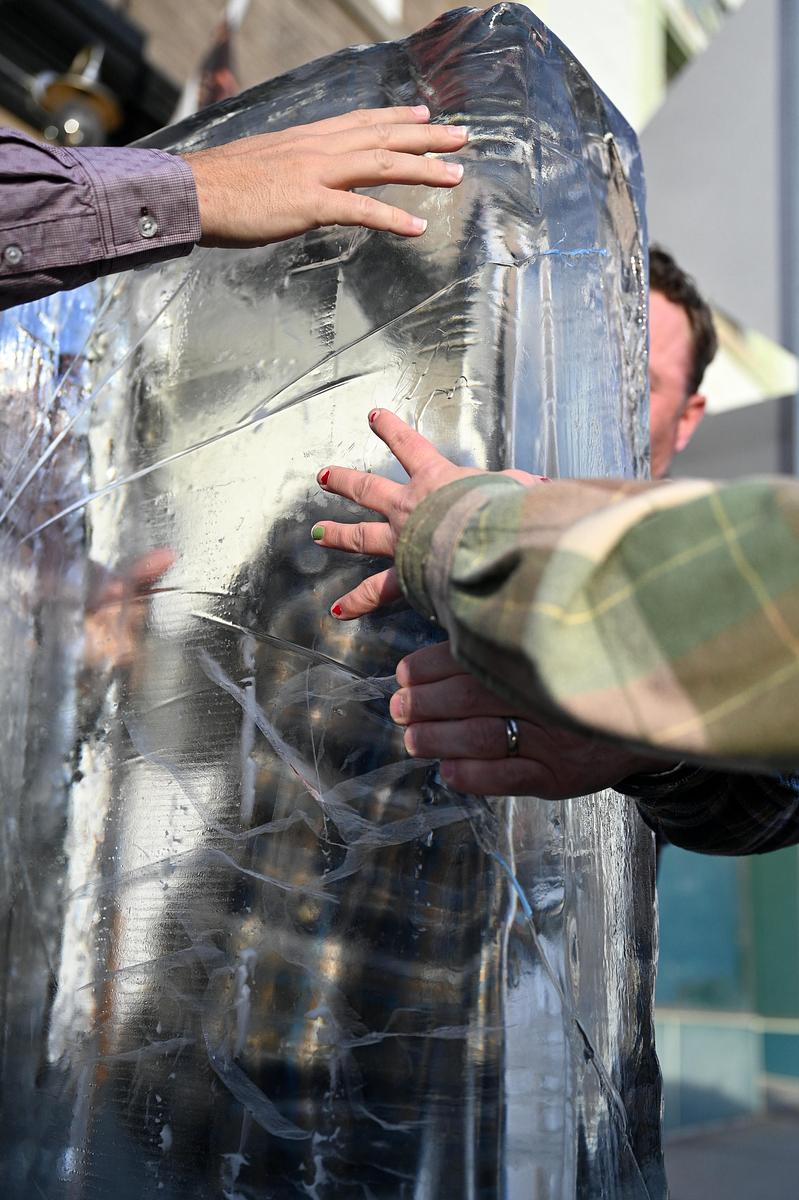
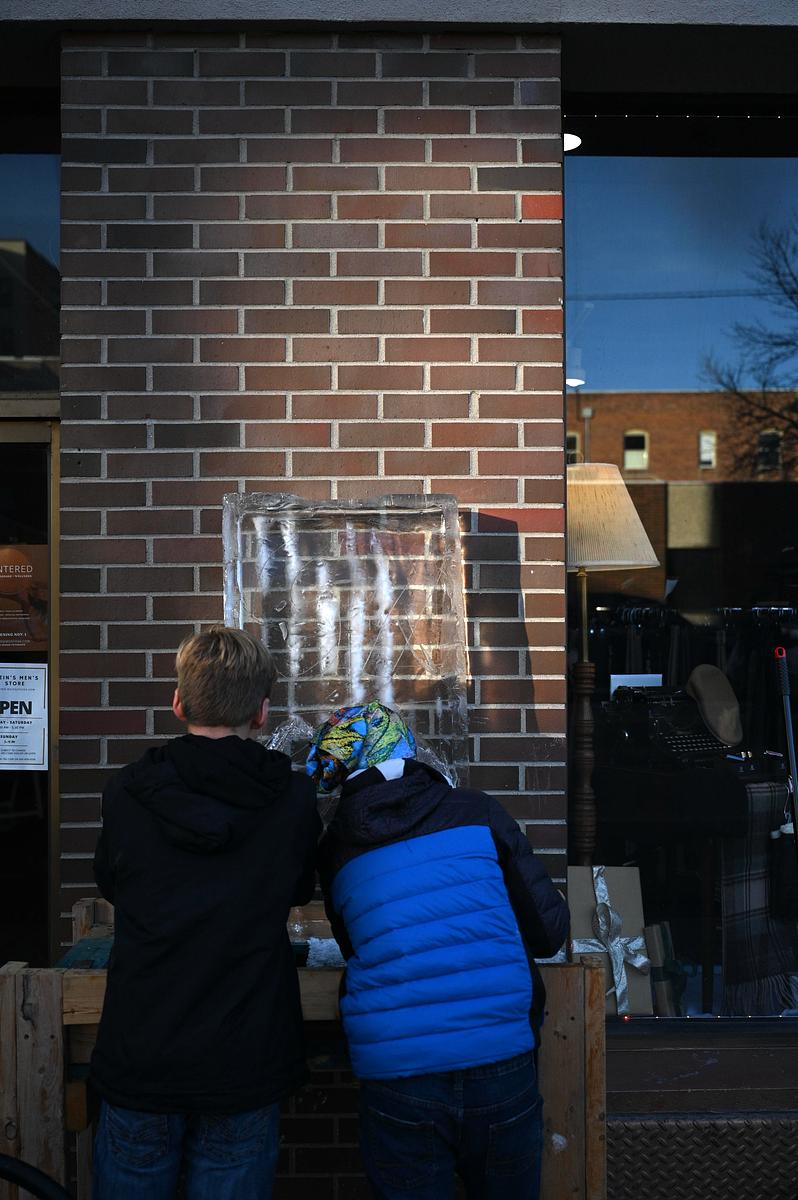
On sidewalks across Uptown Butte the sun shimmers through translucent three-foot-tall blocks of ice. Business owners, teachers, construction managers and other ice artists ready their chisels and saws.
Over the next six hours, 33 teams of people from Butte, Libby, Anaconda and Belgrade will chip, shave and ultimately transform the melting rectangles into glistening sculptures. It’s Dec. 14 and I’m here, camera in hand, because I wanted to capture it all for you before the sun melted the sculptures away. Along the way I thought I might also pick up some tips — for future contestants, like maybe even yours truly — on how to win.
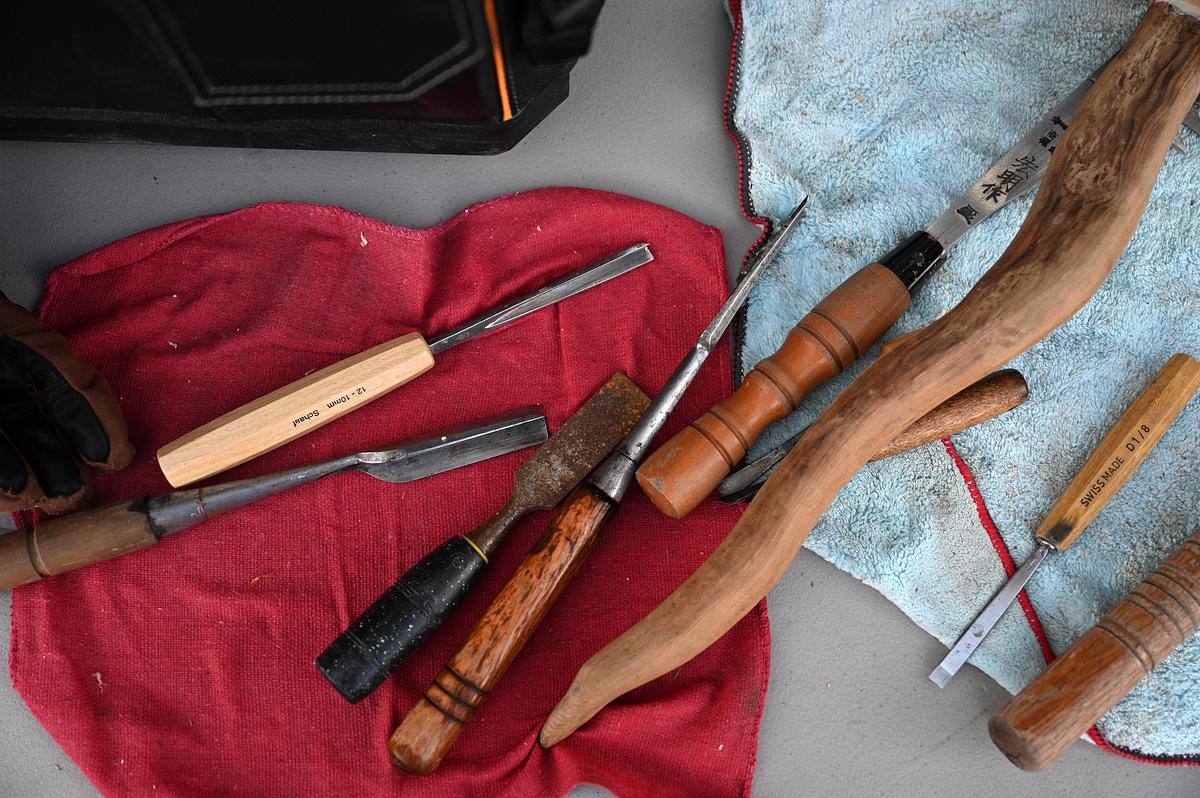
Since the annual carving contest began 25 years ago, Butte has seen all types of animals, Santas and even a Marilyn Monroe disqualified for being “too risque.” Aside from family-friendly aesthetics, the rules are pretty straightforward. Teams of up to two people are allowed to use approved hand tools — as in nothing mechanical or electric — to carve whatever they want, however they want, so long as they do “not add elements that were not a part of the original ice block.”
“Torches can be used for finishing touches ONLY and may not be used to aid in the carving of sculptures,” according to the rules.
Teams are judged in three categories: the master class, which includes previous grand prize winners; beginners, which includes anyone with up to three years of carving experience; and the adult class, meaning everyone else of any age.
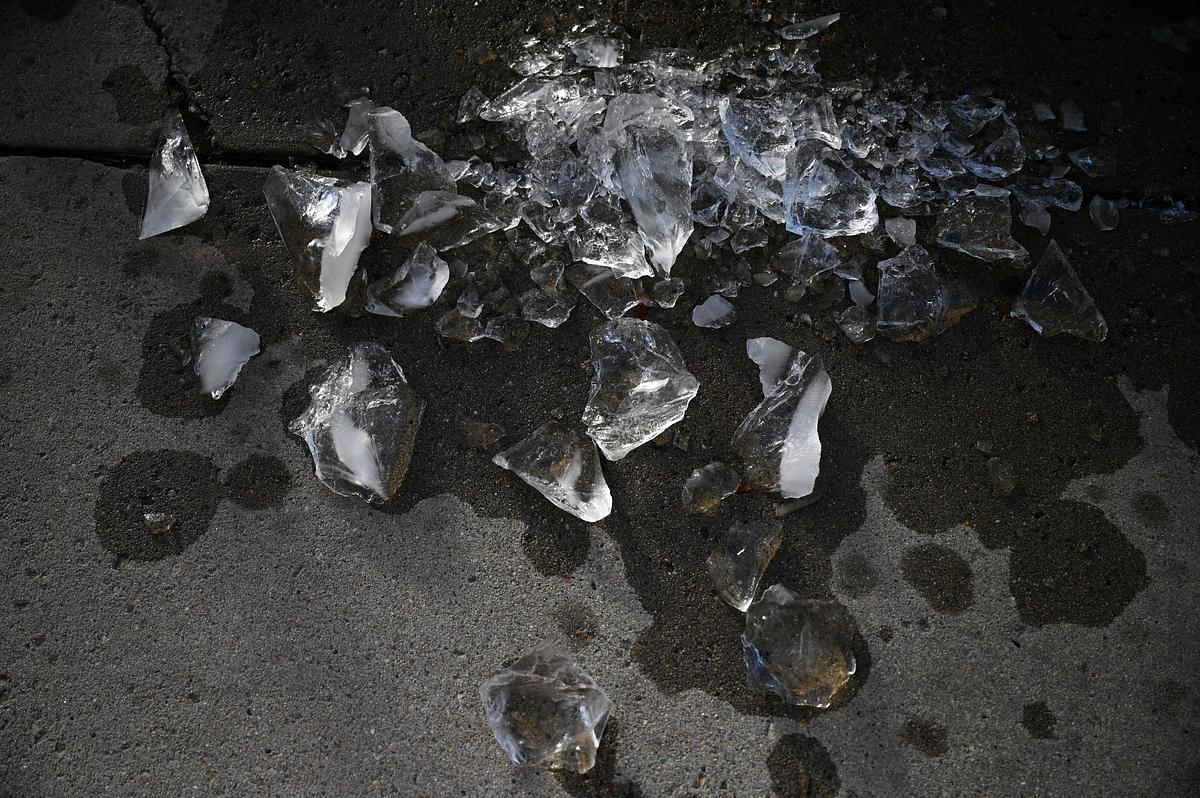
According to Melanie Mangione and Chris Berryhill, two professional ice carvers who served as this year’s judges along with local business owner Carrie Fisher, great carvers think about the block from every angle: as a three-dimensional sculpture, not just a two-dimensional image. Most of the blocks are displayed on the sidewalk for that purpose, so onlookers can move around the ice. Judges look for form, craftsmanship and symmetry, and how much is taken away, repurposed or reused. But as with every powerful piece of art, it most importantly comes down to feeling.
“When you’re doing ice, one of the best things you can do for a piece is consider a moment in time, right, something that is natural, that evokes emotion or motion,” Mangione, a former Butte Grand Champion winner, told me as she snapped photos of a sculpture to reference in judging later.
“For example, like a fish swimming in a sculpture is going to be more appealing than if somebody does a house, because, you know, a house is static,” Berryhill, Mangione’s teammate, added while trying to wrangle their excited cattledog. “It’s always going to be the same, but the fish is a moment in time, so it’s actually, you know, caught in a movement.”
Beyond that, there is no single way to ensure you get a medal. Even the masters profess vastly different approaches.
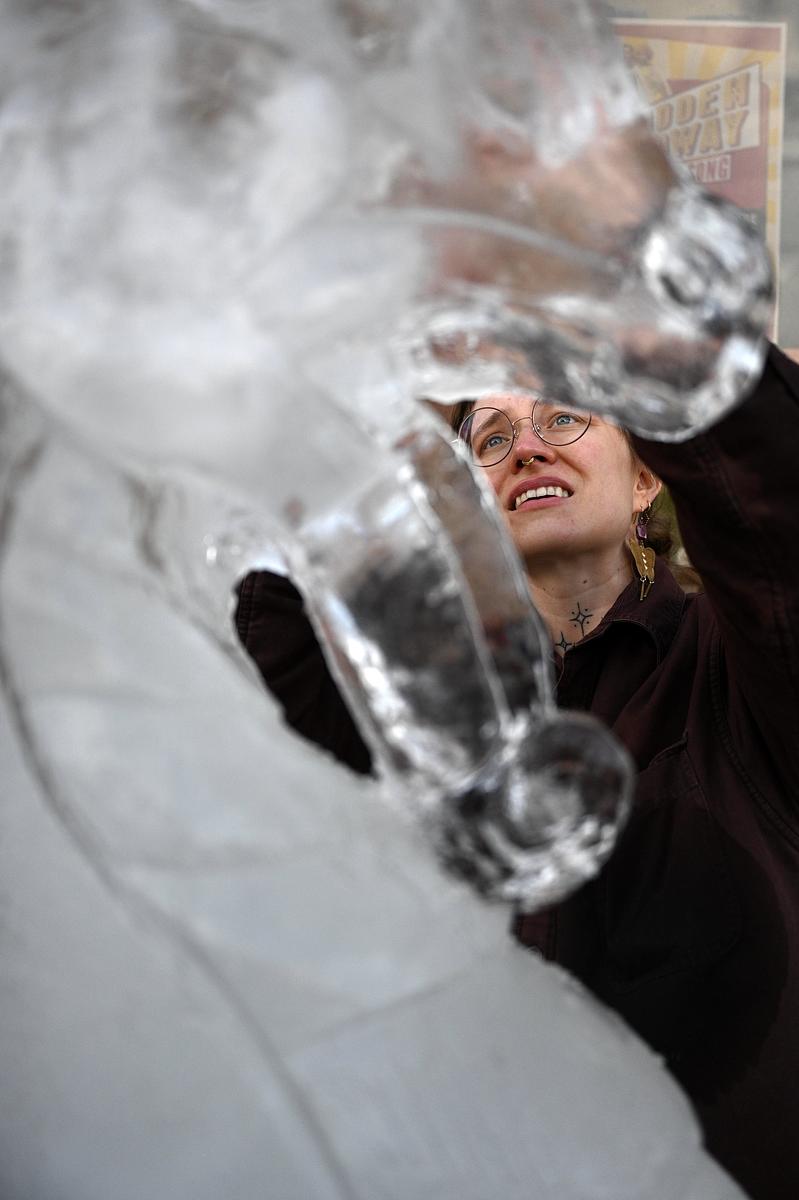
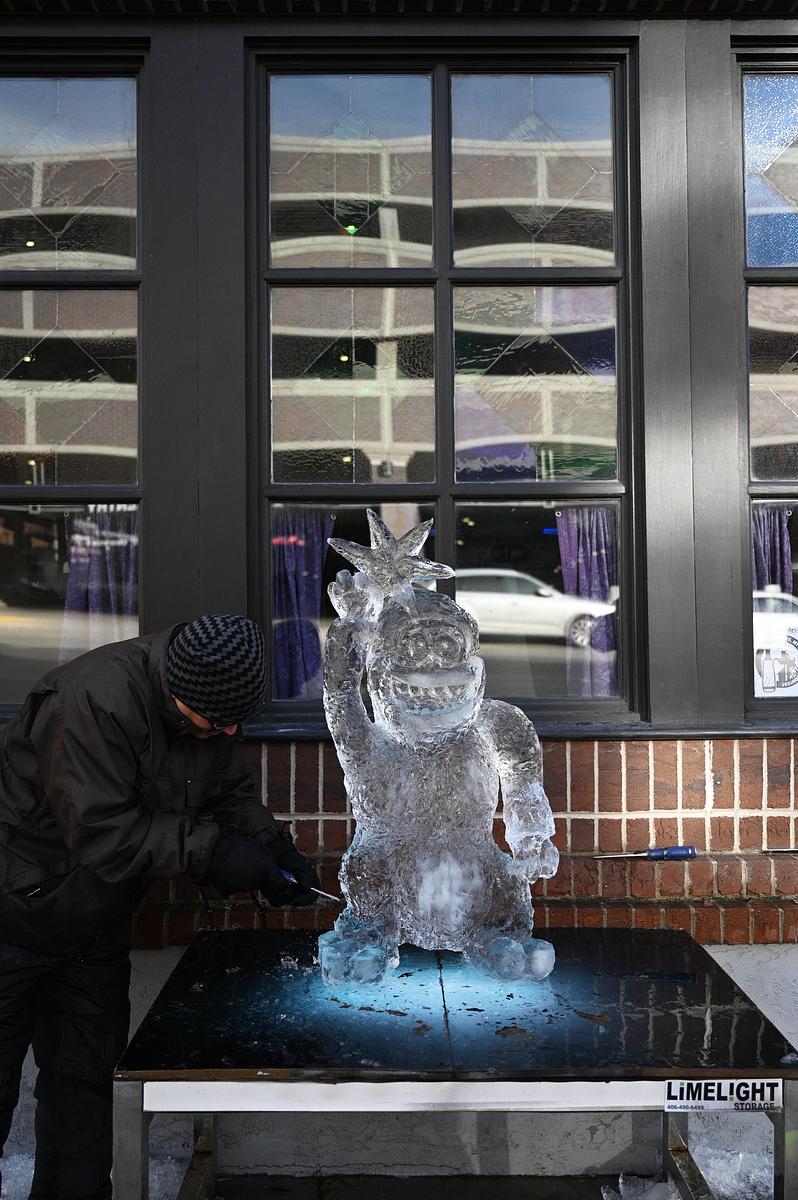
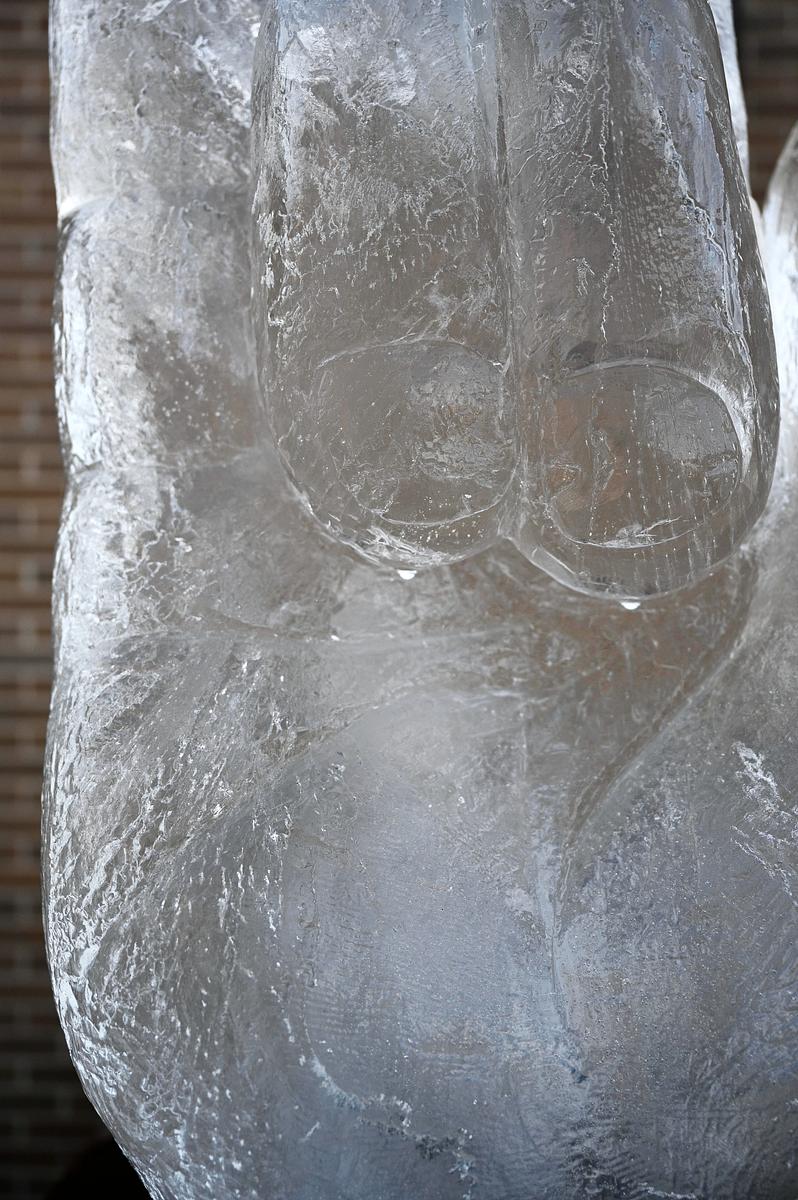
Frank Hall, a graphic designer who has placed as Grand Champion multiple times, starts out by picking his design, printing the image as a reference and scratching a rough outline on the ice before carving. With higher than normal temperatures this year he decided to go with a more stable, less advanced design — an abominable snowman reaching for a star.
“It was already in there,” said Hall, who has been carving ice since the competition’s inception. “I just got rid of everything else.”
Justin DiShazo, who has also won multiple times, waits for inspiration to strike when he arrives.
“I get up here. I look at the ice,” said DiShazo, a painter by trade. “And sometimes I’ll just be able to see what’s there.”
He used to plan more, but “every time I planned, it never worked out, and always was terrible, and I would hate the result,” he said while chipping away at the bottom of his sculpture. “Now I just try to show up and do a good job and hope that people dig it.”
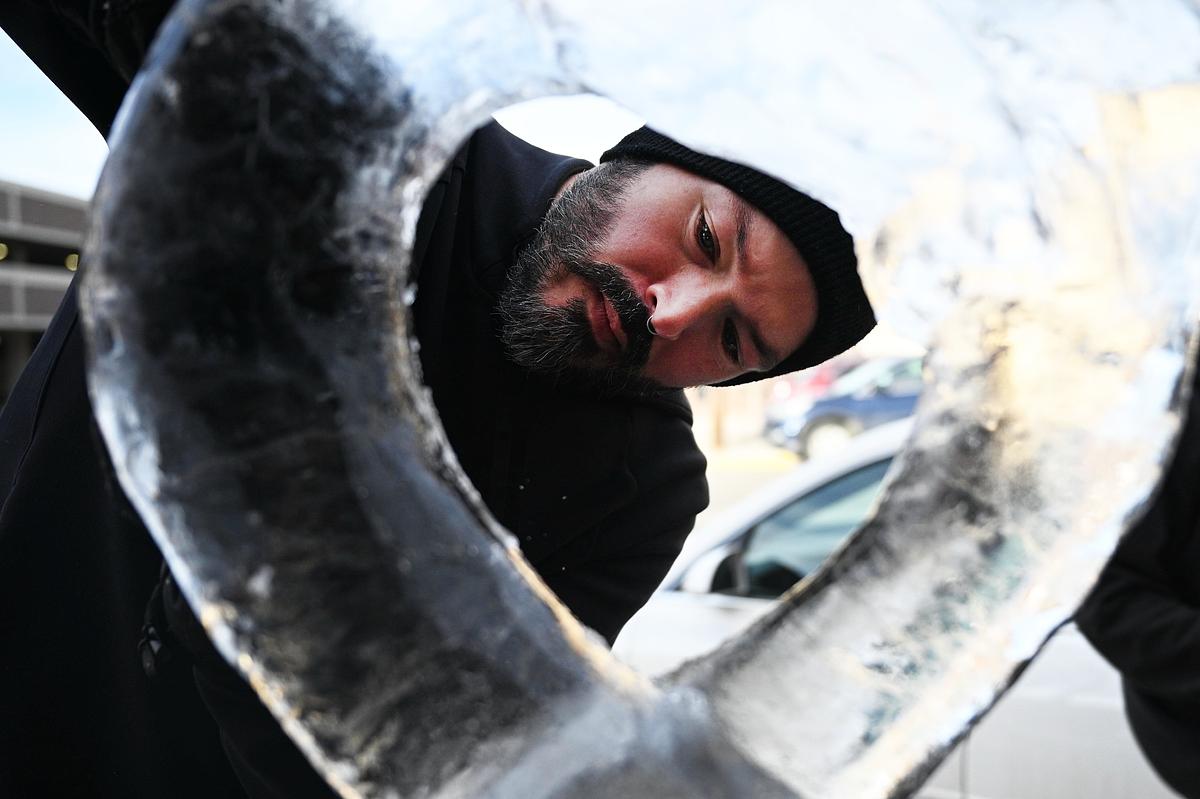
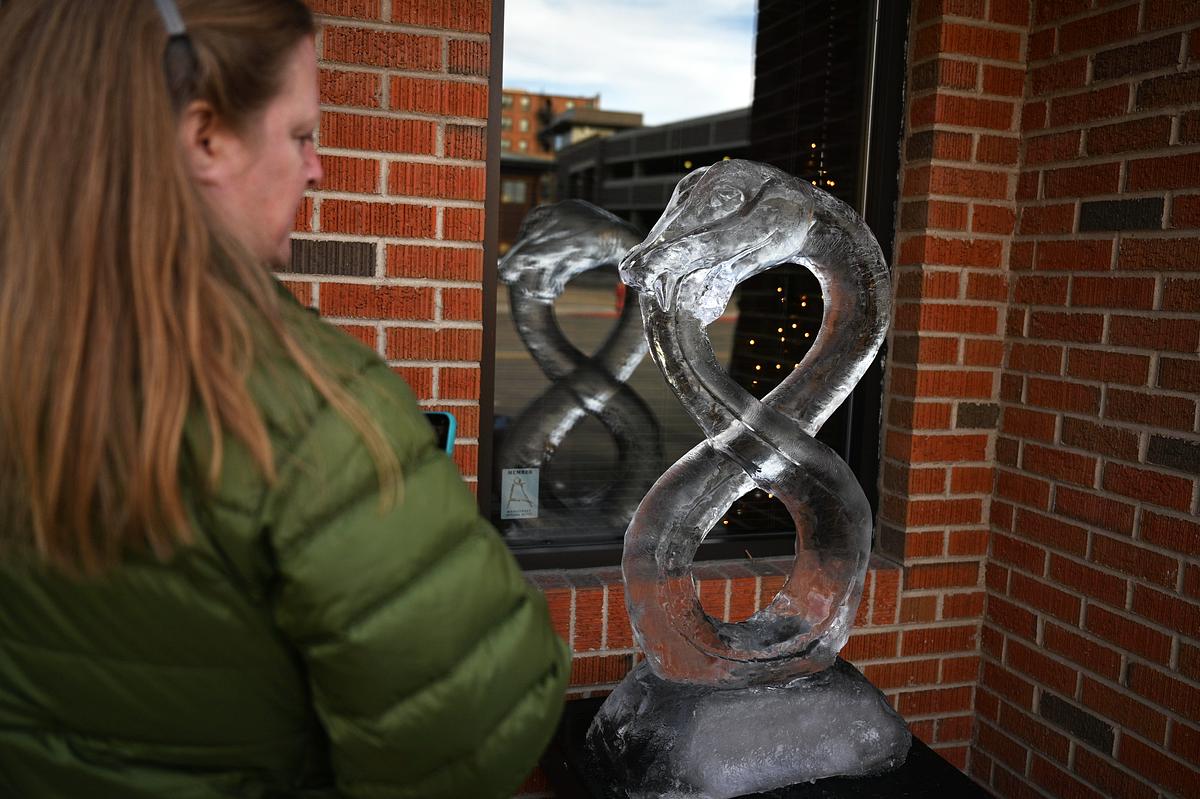
This year he saw an ouroboros— a snake devouring its tail, a symbol of infinity. To get a more realistic snake look, DiShazo used a sponge to smooth half of the creature and a chisel to make scale-like indentations on the other half. One thing DiShazo does especially well is create delicate pieces with different textures and fine details. The judges like that.
“His piece was essentially the most delicate, the most challenging, because he had a very fine sculpture within it with those big holes,” said Mangione, the judge. “Not only that, but the circumference, the diameter of each snake as it continued through the body, was regular. It wasn’t lumpy … We really liked the stylization of the head and the fine detail that he put in the scales for, like, the top of the body.”
That commitment to detail earned DiShazo the grand champion prize: $500, a trophy and vouchers to spend at businesses in Uptown Butte. (First and second place also receive these vouchers.) While DiShazo retained his crown for another year, John Blanchard and Cody Powell, who carved a vulture and placed first in the adult category, were hot on his tail.
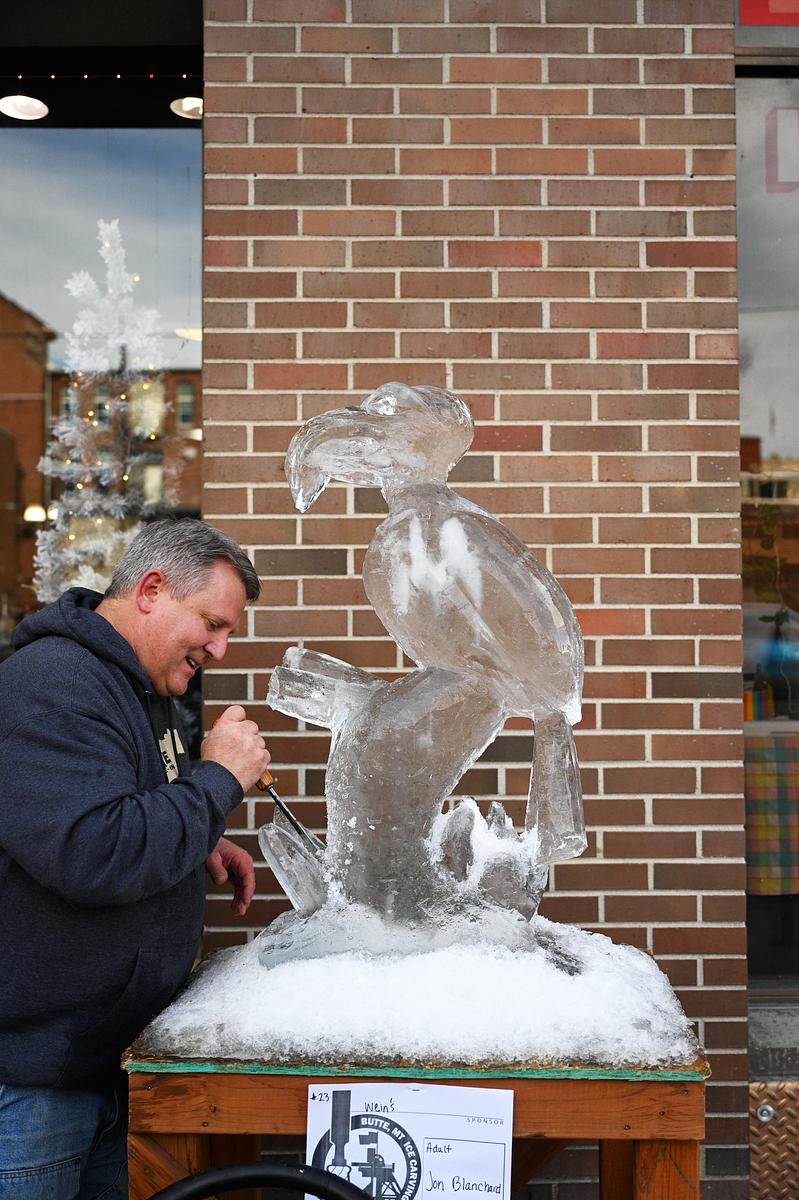
“They came very, very close to winning grand champion,” Mangione said. “He’s only been carving a couple years, so I expect he’ll bump up.”
DiShazo insisted that it’s not about winning, but spending a day outside, creating something temporary to share.
“As time passes and weather fluctuates, it melts, and it gets this really sort of beautiful sheen,” DiShazo said. “People can appreciate it and all the different stages as it disappears. And if that’s not a testament to the human experience — let’s just appreciate things as they disappear.”